1.New Energy Vehicles and Transportation
This is currently one of the most critical application areas for axial flux motors, and its advantages include:
Improved Space Utilization: Their flat structure makes them ideal for integration into wheel hubs or axles. For example, after adopting in-wheel motors, China’s electric buses have achieved a completely flat passenger floor, allowing them to accommodate more passengers while maintaining the same vehicle length.
Increased Range and Performance: Compared to traditional motors, they reduce weight by approximately 50%, freeing up more space for batteries and effectively extending driving range. High-performance electric vehicles also value their high torque density.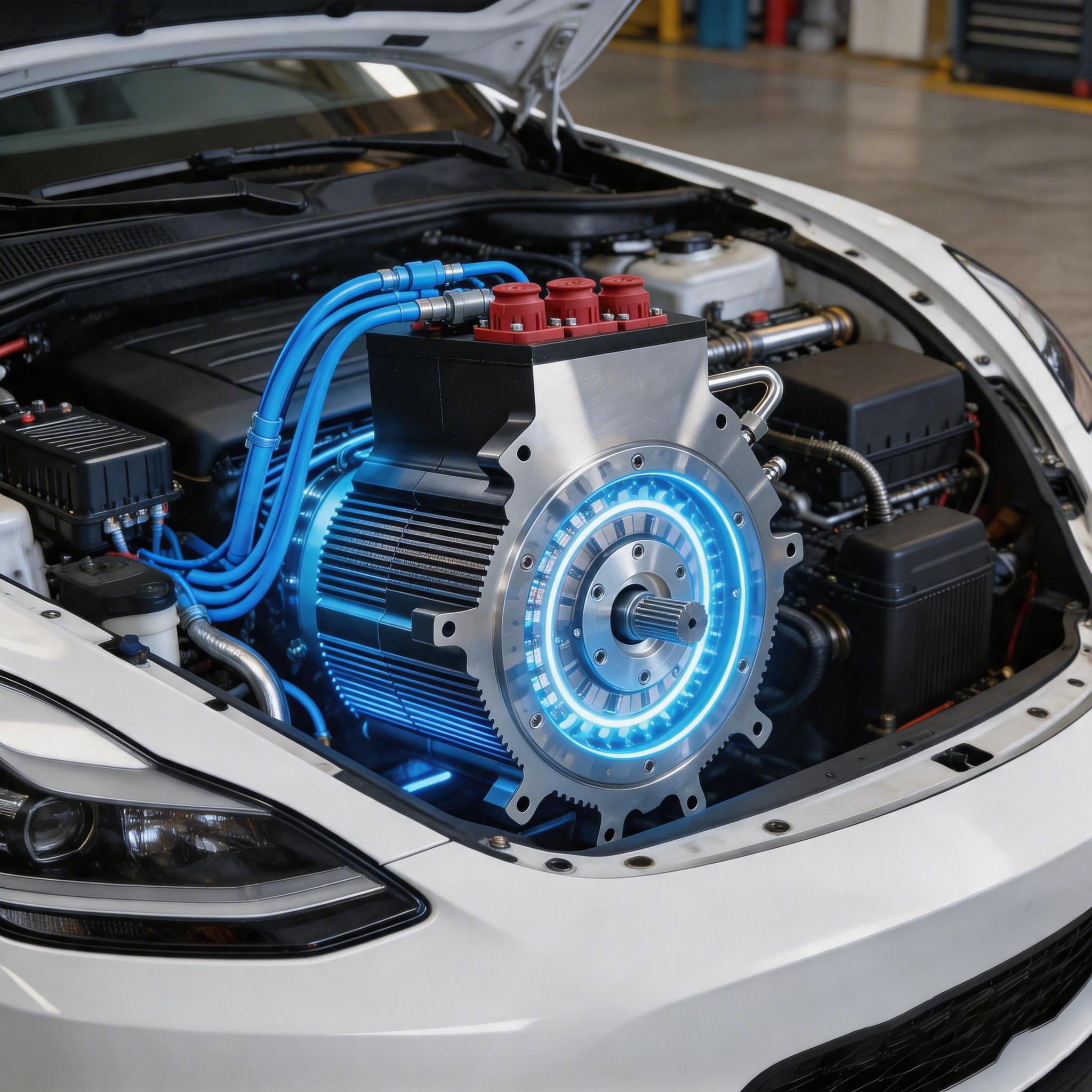
2.Aerospace Sector
The aerospace industry imposes extremely stringent requirements on equipment weight and reliability, making axial flux motors an ideal choice:
Supporting new types of aircraft: They provide critical propulsion for electric vertical takeoff and landing (eVTOL) aircraft, urban air mobility (UAM), and hybrid aircraft. Their high power density enables a better thrust-to-weight ratio.
Applications in Critical Subsystems: A specific example is their use in satellite reaction wheels, where PCB stator winding technology enhances system reliability and integration.

3.Industry and Robotics
In the fields of industrial automation and robotics, axial flux motors are also playing an increasingly important role:
Creating more agile robots: In the joint drive modules of humanoid robots, these motors deliver extremely high torque density (up to 293 Nm/kg), enabling more agile movements and greater load-carrying capacity. Industrial robots also benefit from their combination with precision reducers (such as harmonic reducers).
Powering High-Performance Equipment: Their flat design makes them ideal for space-constrained precision equipment, such as camera gimbals, universal joints, scanners, and medical imaging devices (e.g., MRI and CT scanners). They also offer advantages in applications such as machine tool spindles and CNC equipment.

4.Applications in Agricultural Machinery
The use of axial-flux motors in agricultural machinery primarily addresses the core challenges faced by traditional agricultural machinery during its transition to electric power, including space constraints, weight sensitivity, and high efficiency requirements. With its flat, lightweight, and highly efficient design, this technology is becoming a key driver in advancing the green and intelligent transformation of agricultural machinery.


 86-0519-86163211,86-0519-86163212