The “Underwater Health Check” of Dams Depends on the Precise Coordination of Multiple Thrusters in Dark Currents – Wheatstone Subsea Motors Keep ROVs Steady Against Dam Faces
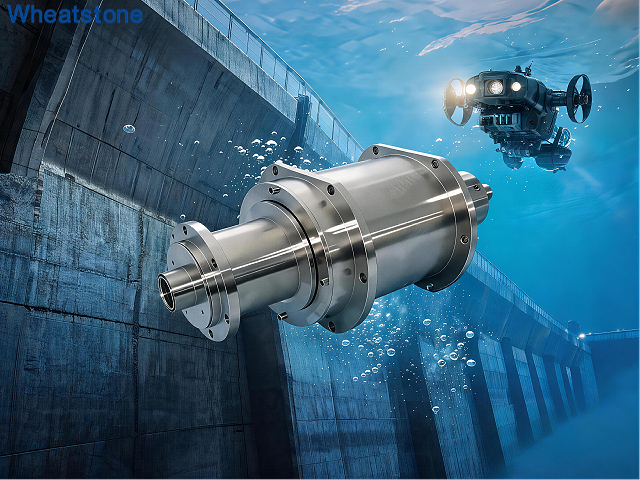
China is a major hydropower nation. By the end of 2023, the country had completed over 98,000 reservoir dams of various types. These dams must not only withstand water storage pressure but also endure the of floods, earthquakes, weather variations, and geological changes. Cracks, leakage, and structural damage to dam bodies threaten the safety of millions of people downstream.
Traditional manual diving inspections have significant limitations – restricted diving depth, low operational efficiency, and high safety risks. The use of remotely operated vehicles (ROVs) for dam defect inspection effectively mitigates these issues while improving detection accuracy and efficiency.
In dam underwater inspection operations, the ROV's propulsion system is the core. For example, a dam inspection ROV for a large hydropower station is equipped with multiple high thrust-to-weight ratio thrusters, delivering powerful underwater manoeuvrability with a maximum operating depth of 300 metres, capable of stable operation in the complex underwater environments of hydropower facilities. Some dam inspection robots have even more stringent technical specifications – 8 or more thrusters, maximum thrust of at least 56N, supporting 360-degree omnidirectional movement with full degrees of freedom, and all-direction current-resistant stability-.
The Four Extreme Requirements of Dam Inspection ROV Thrusters
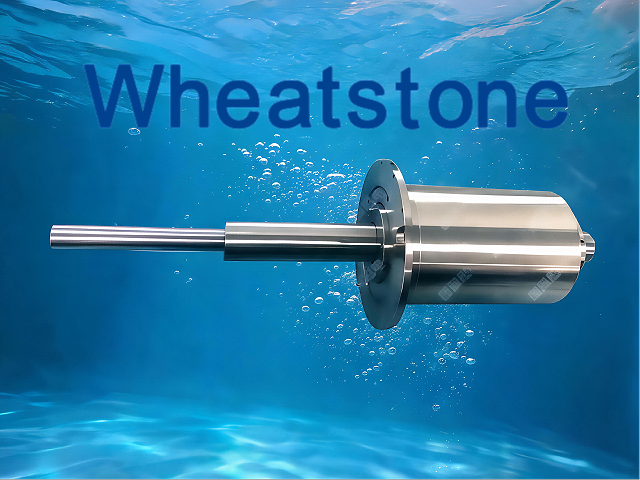
The dam underwater inspection environment is a compound test chamber combining high pressure, low temperature, currents, and sediment.
Requirement 1: High Thrust-to-Weight Ratio – High Thrust from Compact Size
Every additional gram of ROV weight requires buoyancy material to compensate. Propulsion motors must deliver maximum thrust within the smallest possible volume and weight. Dam inspection ROVs typically carry 4 to 8 thrusters, and the thrust of each directly affects the ROV's current resistance and positioning accuracy. Insufficient thrust causes the ROV to be swept off course by currents near the dam; excessive thrust increases volume and weight, compromising overall manoeuvrability.
Requirement 2: High Current Stability – Holding Position in Flowing Water
Current velocities near dam intakes can reach 2-3 m/s, and the flow conditions near dam surfaces are complex and variable. ROVs must perform tasks such as crack photography, leak detection, and sonar scanning in such environments. Propulsion motors must deliver rapid dynamic response, adjusting thrust output within milliseconds to resist external current disturbances and ensure stable hovering against the dam surface.
Requirement 3: Extended Continuous Operation – Hours of Submersion per Dive
Dam body inspection often requires hours of continuous operation. In a panel dam leak detection task at a pumped storage power station, the ROV needed to conduct comprehensive underwater scanning along the dam face, quickly locating and recording data upon discovering leaks. This requires propulsion motors to maintain stable operation for hours without overheating, efficiency degradation, or thrust fluctuation.
Requirement 4: Deep-Sea Grade Sealing – Withstanding 300 Metres of Water Pressure
Dam inspection ROVs have maximum operating depths of 300 metres or more. Dozens of sealing points – housing mating surfaces, cable exits, and shaft extensions – must simultaneously withstand water pressures exceeding 3 MPa. If any single seal fails, seawater penetrates through micron-level gaps and the entire motor is condemned.
Wheatstone Subsea Propulsion Motors: The “Underwater Power Heart” Engineered for Dam Inspection ROVs
Jiangsu Wheatstone, with more than 20 years of specialised experience in special-purpose motors, has developed a full range of subsea propulsion motors specifically for the demanding conditions of dam underwater inspection ROVs.
High Thrust-to-Weight Design – Keeping ROVs Steady in Currents
Wheatstone subsea propulsion motors employ permanent magnet synchronous or brushless DC technology, delivering maximum power output within limited space through compact electromagnetic design and lightweight construction. Thrust range covers 5kgf to 500kgf, accommodating everything from observation-class ROVs to large work-class ROVs. High power density provides ample thrust margin without increasing overall ROV weight.
Wide-Temperature Adaptability – Handling Reservoir Thermal Stratification
Reservoir water exhibits significant thermal stratification – surface temperatures can exceed 20℃, while bottom waters remain at 40℃ year-round. Motors undergo dramatic temperature changes during ascent and descent. Wheatstone subsea motors use aviation-grade fluorocarbon rubber seals and wide-temperature specialty greases, maintaining stable sealing performance and lubrication across a wide temperature range from -40℃ to +200℃.
Multi-Level Sealing Technology – Securing the Pressure Defence at 300 Metres
Wheatstone deep-sea motors employ three sealing barriers: static seals using aviation-grade FKM O-rings (compression set <15%); dynamic seals using double-face silicon carbide mechanical seals; and cable seals using glass-sintered terminals. The motor series covers four depth ratings: 500m, 3000m, 6000m, and 8000m – 300 metres is just the starting point.
Full-Cycle Test Validation – Every Motor Passes the “Underwater Simulation Exam”
Every Wheatstone subsea propulsion motor undergoes static pressure testing, dynamic pressure testing, insulation resistance testing, and simulated depth sealing testing before delivery – ensuring long-term reliable operation in the complex underwater environments of dam inspection.
Applicable Standards Reference
| Standard | Scope |
| IEC 60529 | Degrees of protection provided by enclosures (IP Code) – Defines waterproof ratings for subsea equipment |
| IEC 60034:2022 | Rotating electrical machines – Part 1: Rating and performance |
| ISO 13628-6 | Petroleum and natural gas industries – Design and operation of subsea production systems |
Wheatstone Subsea Propulsion Motor – Technical Specifications (Dam Inspection ROV Configuration)
| Parameter | WHEATSTONE Subsea Propulsion Motor Specification |
| Depth rating | 500m / 3000m / 6000m / 8000m (customisable) |
| Thrust range | 5kgf – 500kgf per thruster |
| Motor type | Brushless DC / Permanent magnet synchronous (customisable) |
| Sealing technology | Double mechanical seals + FKM O-rings + Glass-sintered terminals |
| Temperature range | -40℃ to +200℃ |
| Insulation class | Class H (180℃) with VPI processing |
| Power range | 50W – 200kW |
When a dam inspection ROV hovers precisely in currents before the dam face; when the sonar system scans for cracks and leaks along the dam surface; when the high-definition camera captures every detail of the dam body at 300 metres depth – inside every ROV's propulsion system, WHEATSTONE subsea propulsion motors are supporting every precise operation of the dam's “underwater health check” with high thrust-to-weight design and deep-sea grade sealing.
About Wheatstone
With more than 20 years of specialised experience in special-purpose motors, WHEATSTONE offers a comprehensive portfolio including subsea propulsion motors, flameproof servo motors, high-temperature motors, and marine motors. The company is ISO9001 and IATF 16949 certified. The subsea motor series covers four depth ratings: 500m, 3000m, 6000m, and 8000m, with thrust range from 5kgf to 500kgf and custom solutions from 50W to 200kW.
For customised subsea propulsion motor solutions for dam inspection ROV applications, please contact the Wheatstone technical team.

 86-0519-86163211,86-0519-86163212







