How Many Tests Must a HighTemperature Motor Pass Before Delivery?
You are here: Home » Blog » Products & Technology » How Many Tests Must a HighTemperature Motor Pass Before Delivery?
How Many Tests Must a HighTemperature Motor Pass Before Delivery?
Views: 0 Author: Site Editor Publish Time: 2026-06-11 Origin: Site
From Insulation Resistance to Thermal Cycling, Wheatstone Ensures LongLife Reliability with FullScope Testing
In hightemperature industrial environments such as steel continuous casting lines, glass furnaces, and petrochemical reactors, the cost of motor replacement far exceeds the price of the motor itself. Unplanned downtime directly erodes profitability. Users often focus only on nameplate ratings such as “insulation class” and “ingress protection”, but overlook the critical factor determining motor life: whether the factory test program is comprehensive and whether test conditions simulate real operating conditions. Jiangsu Wheatstone has established a fullscope test system covering electrical performance, mechanical characteristics, thermal stability, sealing, and environmental adaptability for its hightemperature motors. Each motor undergoes dozens of tests before delivery, ensuring longterm, stable, and reliable operation at the user‘s site.
I. Core Test Items and Standards for HighTemperature Motors
A qualified hightemperature motor must pass the following tests:
Insulation Resistance Test: Evaluates the resistance characteristics of winding insulation at high temperatures, preventing leakage and breakdown. A 500 V or 1000 V megger measures insulation resistance between windings and housing, requiring ≥100 MΩ at 25 °C. For Class H (180 °C) hightemperature motors, hotstate insulation resistance must remain at a high level to ensure longterm electrical safety.
Dielectric Withstand Test: Verifies the insulation system‘s ability to withstand overvoltages. According to IEC 600341 or GB/T 755, apply AC voltage of 2UN + 1000 V (typically not less than 1500 V) for 1 minute, with no breakdown or flashover. High withstand voltage margin is essential for stable motor operation under grid voltage fluctuations.
Temperature Rise Test: Measures temperature increases of windings, bearings, and housing under rated load, verifying thermal design. Using the thermocouple method (embedded sensors) or resistance method (cold/hot resistance change) per IEC 600341, ensure that temperatures do not exceed insulation class limits under maximum ambient temperatures (typically 60100 °C).
Efficiency Test: Using the inputoutput method (GB/T 1032) or loss analysis method (IEC 6003421), a highaccuracy power analyzer synchronously measures input electrical power and output mechanical power to calculate efficiency at various load points (25 %, 50 %, 75 %, 100 %). Hightemperature motor efficiency is typically required to be ≥90 %.
Vibration and Noise Test: Measures vibration velocity (mm/s RMS) and sound pressure level (dB(A)) at rated speed, assessing rotor balance, bearing condition, and assembly quality. Vibration severity is typically required to be ≤1.8 mm/s (per ISO 108163), with noise levels generally controlled below 7585 dB(A).
Thermal Cycling Stability Test: Simulates repeated heating and cooling cycles experienced during actual startstop operation. Place the motor in a temperature chamber, cycling between room temperature and rated operating temperature (e.g., 25 °C ↔ 180 °C) for tens to hundreds of cycles, testing the effects of thermal expansion on insulation, bearing clearance, and seals.
Surge Test (TurntoTurn Insulation): Detects weak points in winding turntoturn insulation. Apply highfrequency highvoltage pulses and compare the decay oscillation waveforms of the three phase windings to determine if there are turntoturn shorts or insulation damage.
Ingress Protection (IP) Verification: For motors rated IP65/IP66 or higher, dust tests (IP6X) and water jet/immersion tests (IPX5/IPX6) are performed to verify that housing seals meet site requirements for washdown and dustladen environments.
Bearing Axial Endplay and Clearance Measurement: Measures axial displacement and radial clearance of bearings to prevent seizure due to thermal expansion. Hightemperature motors typically use C3/C4 clearance bearings; clearance values are measured before shipment to ensure they are within design range.
Winding DC Resistance Balance Test: Measures the DC resistance of the three phase windings and calculates imbalance (typically required ≤±2 %), ensuring consistency in turns count, wire gauge, and soldering quality.
II. Dual Assurance: Routine Tests and Type Tests
Routine tests are performed on every hightemperature motor before shipment, including insulation resistance, dielectric withstand, noload current, vibration/noise, and DC resistance balance, ensuring that each individual motor is free of electrical or mechanical defects.
Type tests are conducted on prototypes or first production units to fully validate the design. In addition to routine test items, they include temperature rise, efficiency measurement, maximum torque and lockedrotor torque testing, overspeed testing, and thermal cycling stability, confirming that the design complies with relevant standards.
III. Wheatstone‘s FullScope Test System for HighTemperature Motors
Jiangsu Wheatstone has established a test system for hightemperature motors that combines routine tests with type tests and nondestructive with destructive validation:
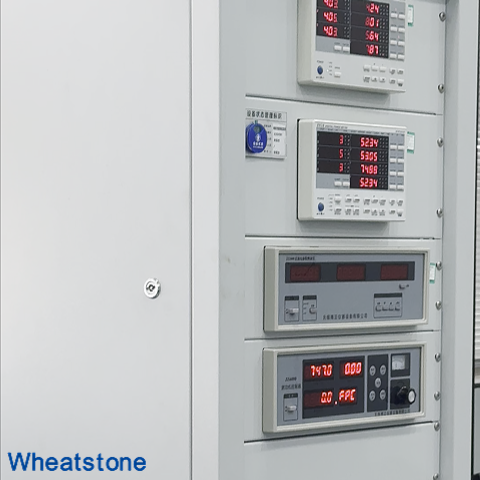
Insulation and dielectric testing: Equipped with 1000 V/2500 V meggers and 5 kV dielectric strength testers, each motor is tested for insulation resistance and dielectric withstand before shipment, ensuring longterm reliability of the insulation system at high temperatures.
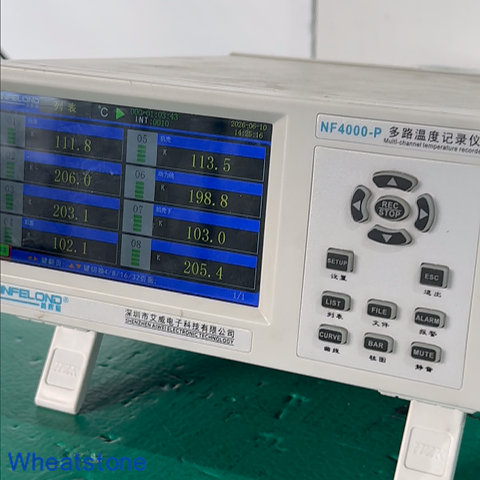
Temperature rise and thermal balance validation: Using a hightemperature load test platform that simulates 60200 °C ambient temperatures, continuous temperature rise curves for windings, bearings, and housing are recorded to verify thermal management design.
Vibration and noise analysis: Equipped with highaccuracy vibration testers and sound level meters; vibration is measured in horizontal, vertical, and axial directions to ensure smooth operation.
Ingress Protection (IP) testing: Dust test chambers and water jet/immersion test equipment verify IP65/IP66 protection capability.
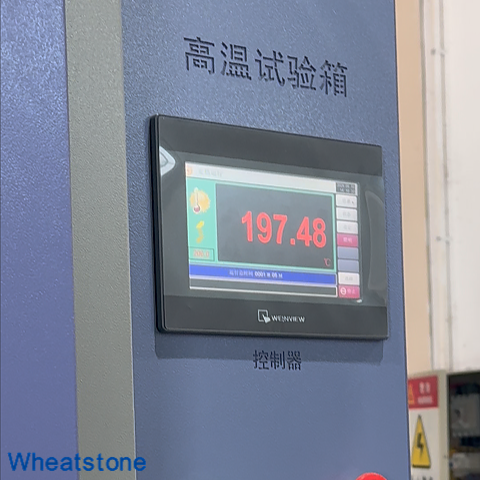
Widetemperature environmental simulation: A widetemperature test chamber covers -40 °C to +200 °C, supporting constant temperature, thermal cycling, and gradient ramp modes – effectively simulating harsh conditions such as drying ovens and furnace surroundings.
Every Wheatstone hightemperature motor is delivered with a complete test report, including insulation resistance values, dielectric test results, temperature rise curves, vibration spectra, efficiency maps, and thermal cycling records – all data fully traceable. From material screening to final acceptance, Wheatstone‘s rigorous “fullscope testing, traceable reports” approach provides solid assurance for longterm, stable operation of every hightemperature motor at the user‘s site.

 86-0519-86163211,86-0519-86163212