When Humanoid Robots Begin to Run, the Motors Driving Their Joints Must Be Redesigned – How Wheatstone Axial Flux Motors Become the “Core Muscles” of Robotics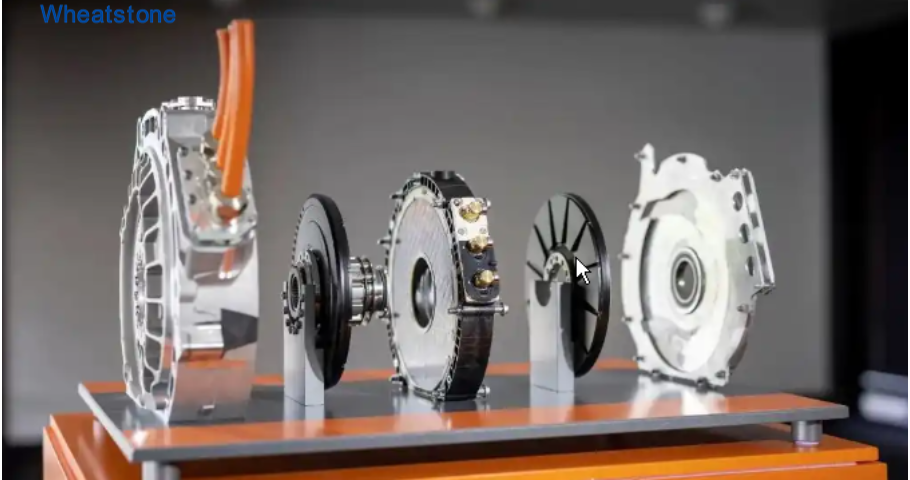
In 2026, the humanoid robotics industry is at the dawn of explosive growth. Tesla Optimus, Xiaomi CyberOne, Unitree H1 – dozens of humanoid robots are transitioning from laboratories to factories and homes. Every walk, jump, and grasp performed by these robots depends on the coordinated motion of dozens of precision joints. The power core of each joint is a motor.
Conventional robot joints typically use radial flux motors paired with gearboxes. However, the cylindrical form factor of radial flux motors has inherent limitations – long axial length, high moment of inertia, and limited power density. In joints such as knees and hips that demand high-frequency motion and high-load operation, these shortcomings are amplified: motor response lag, bulky joints, and high energy consumption.
What kind of motor do humanoid robot joints need?
The answer: axial flux motors.
Axial Flux Motors: The Natural Partner for Robot Joints
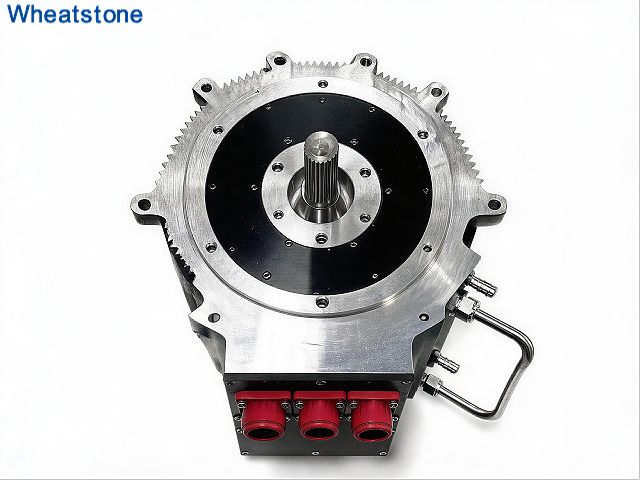
The flat disc design of axial flux motors provides extremely short axial length, allowing the motor to be mounted flush against the joint mounting surface embedded within the robot limb. This structure naturally satisfies the triple requirements of robot joints: short axial length, high torque, and lightweight construction.
In robot joint modules, the axial flux motor serves as the "heart" of the module – delivering high power in a compact form factor, with power density up to twice that of conventional motors. In robot joint modules, the flat disc design reduces moment of inertia, enabling precise support for high-frequency motion and high-load operation in joints such as knees and hips.
Axial flux permanent magnet motors have been the subject of ongoing research in robot joint applications. Studies indicate that dual-rotor axial flux permanent magnet (DRAFPM) motors offer advantages in reducing iron loss and minimising volume by eliminating the stator yoke. Axial flux motors feature short axial length, high torque density, and compact structure, showing significant application potential in high-load robots.
From Laboratory to Production: Domestic Breakthrough in Robot Joints
At the Jilin University Chongqing Research Institute, its portfolio company Xinghan Power Technology Co., Ltd. has achieved stable mass production of axial flux motors and axial flux joint modules. The axial flux joint module integrates motor, gearbox, encoder, and drive components into a complete "muscle tissue" assembly responsible for torque multiplication, precise control, and intelligent actuation.
In one commercial order, a custom axial flux joint module became the core "muscle" of the next-generation humanoid robot, enabling precise execution of complex motions across multiple scenarios. From laboratory to mass production, the company achieved this transition in just one year, setting a new benchmark for industrialisation speed.
In the humanoid robotics field, axial flux motors can reduce joint actuator weight by 40-50%. With power density of 3-5 kW/kg and torque density of 15-25 N·m/kg at 92-95% efficiency under rated load, axial flux permanent magnet motors have become the preferred motor topology for weight-critical humanoid robot joint actuators.
Wheatstone Custom Axial Flux Motors: “Power Muscles” Engineered for Robot Joints
Jiangsu Wheatstone, with more than 20 years of specialised experience in special-purpose motors, offers customised axial flux motor solutions for robot joint modules.
Customisation 1: Flat Form Factor – Flush-Mounted, Space-Efficient
The flat disc design of Wheatstone axial flux motors compresses axial length to one-third that of conventional motors, with moment of inertia reduced by 40-60%. The motor can be embedded directly within the robot joint without occupying additional limb space.
Customisation 2: High Torque Density – Making Robots Run Faster and Lift Higher
Through optimised electromagnetic design and high-performance permanent magnets, Wheatstone axial flux motors deliver higher torque output within the same volume. When paired with direct-drive or low-ratio transmission solutions, they enable high-bandwidth force control and low reflected inertia – making robot motions more agile and precise.
Customisation 3: Integrated Encoder and Drive – Precise Control of Every Degree of Rotation
Wheatstone can integrate high-resolution encoders and customised drive solutions according to joint module design requirements, achieving precise closed-loop control of position, velocity, and torque – ensuring every joint motion is accurate and responsive.
Customisation 4: Thermal Management Solutions – Addressing Heat Generation from High-Frequency Motion
High-frequency joint motions generate significant heat. Wheatstone offers customised forced air cooling, liquid cooling, or natural convection solutions to ensure controllable temperature rise under sustained high-load operation.
Applicable Standards Reference
| Standard | Scope |
| IEC 60034-1:2022 | Rotating electrical machines – Part 1: Rating and performance |
| IEC 60034-2-1 | Standard methods for determining losses and efficiency from tests |
| ISO 12100 | Safety of machinery – General principles for design – Risk assessment and risk reduction |
| ISO 10218 | Robots and robotic devices – Safety requirements for industrial robots |
When a humanoid robot performs precision assembly on a factory floor; when a robot dog runs flexibly across complex terrain; when a bionic arm provides precise assistance in medical rehabilitation – inside every robot joint module, Wheatstone custom axial flux motors are supporting the evolution of robots from "able to walk" to "able to move with agility," with flat form factor and powerful output.
About Wheatstone
With more than 20 years of specialised experience in special-purpose motors, Wheatstone offers a comprehensive portfolio including axial flux motors, flameproof servo motors, deep-sea motors, and high-temperature motors. The company is ISO 9001 and IATF 16949 certified, offering custom axial flux motor solutions from 50W to 200kW for robot joints, dexterous hands, and light mechanical arms.

 86-0519-86163211,86-0519-86163212







