365 Days Submerged, Standard Motors Fail in Six Months – How Wheatstone Submersible Motors Give Aerators a “Long Life” in Aquaculture Ponds
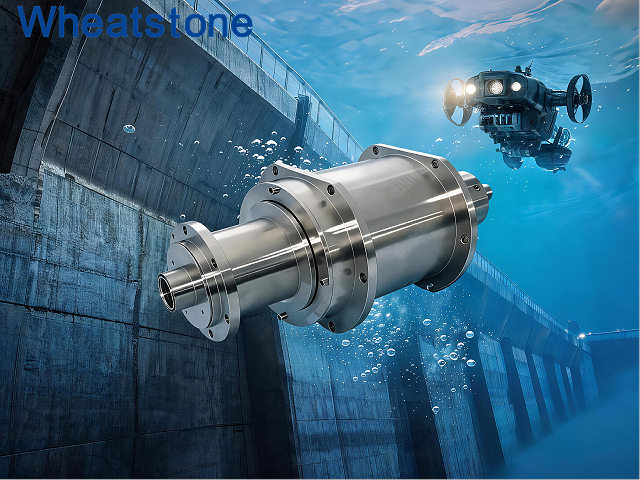
At 4 AM in a shrimp farming pond in Zhanjiang, Guangdong, the aerator starts precisely on schedule. The impeller churns the water surface, continuously injecting oxygen from the air into the water – this is the most critical moment of the day for the farmer. If the aerator suddenly stops, dissolved oxygen levels can drop below the critical threshold within hours, and an entire pond of shrimp could be lost.
Aerators are the lifeline of aquaculture. A single aerator can maintain dissolved oxygen levels across several mu of water body, directly determining stocking density and survival rates-. The global aerator market exceeded RMB 42 billion in 2025, with China contributing nearly 35%-. Within China's aquaculture industry, pond culture represents the largest application segment, with the market expected to exceed RMB 150 billion by 2030-.
Yet the most vulnerable component of any aerator is its heart – the motor.
The “Three Deadly Threats” to Submersible Aerator Motors
Aerator motors are installed directly underwater, permanently submerged in aquaculture water. Standard motors rarely survive a single farming season.
Threat 1: Seal Failure – Water Vapour Penetrates Everywhere
Aerator motors are continuously immersed in water. The shaft extension is a dynamic rotating component, and water molecules continuously penetrate inward along the rotating shaft surface. Under sustained water pressure, conventional seals allow microscopic gaps to become pathways for liquid penetration-. Under frequent start-stop operation, seal lip wear is further accelerated. Once seals fail, moisture intrudes the windings, insulation resistance plummets, and the motor burns out within hours.
Threat 2: Corrosion – Seawater is the “Acid of Metals”
In seawater aquaculture or high-salinity freshwater farming, water contains high salt concentrations and aggressive chloride ions-. Standard motor housings rapidly corrode in saline water – coatings peel, pitting perforation occurs, and fasteners seize-. A standard motor in seawater aquaculture can develop housing perforation within months.
Threat 3: Sediment Abrasion – The “Sandpaper” on Sealing Faces
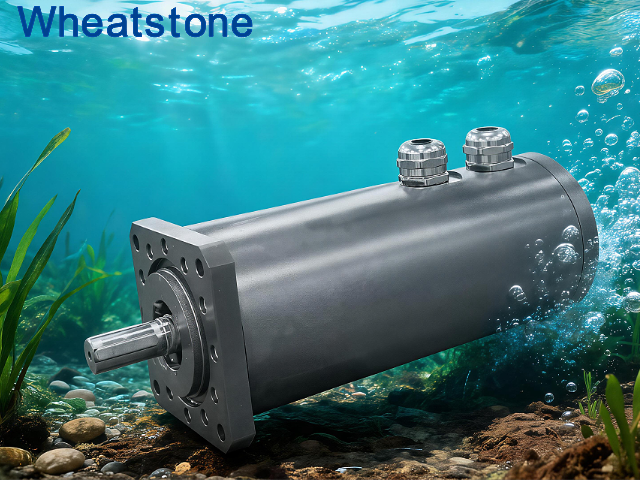
Aquaculture water contains suspended sediment, feed residue, and microorganisms. Once these particles enter the sealing interface, they act like sandpaper, rapidly accelerating seal wear. In sediment-laden water, conventional mechanical seals may have their service life reduced to one-third of normal.
Wheatstone Submersible Aerator Motors: Triple “Immortality” Engineered for Aquaculture Water
Jiangsu Wheatstone, with more than 20 years of specialised experience in special-purpose motors, has developed a full range of submersible aerator motors specifically for the demanding conditions of aquaculture.
Defence 1: Aviation-Grade Static Seals – No “Loosening” from -40℃ to 200℃
Wheatstone submersible motors use aviation-grade fluorocarbon rubber O-rings at all static sealing points – housing mating surfaces and cable exits. The material maintains elasticity across a wide temperature range from -40℃ to 200℃, with compression set below 15% – meaning that after prolonged water pressure exposure, the seal retains more than 85% of its original resilience, tightly fitting the groove and mating surface.
Defence 2: Double-Face Silicon Carbide Dynamic Seals – The Shaft Rotates, Water Does Not Enter
The shaft extension employs double-face mechanical seals with silicon carbide stationary and rotating rings – hardness second only to diamond. The two sealing faces are precision-lapped, forming an almost perfect sealing interface when mated. The seal cavity is filled with high-viscosity sealing fluid, creating a micron-thick fluid film that both lubricates and seals-. A sand-slinger ring structure ensures that even suspended sediment in the water cannot enter.
Defence 3: 316L Stainless Steel Housing – No Rust in Seawater
Wheatstone submersible motors feature 316L stainless steel housing as standard, with molybdenum content providing twice the pitting resistance of 304 stainless steel-. All fasteners are A4-80 grade stainless steel – no rust, no seizure, even after prolonged seawater immersion. For highly corrosive seawater aquaculture applications, the housing surface can also be coated with a heavy-duty anti-corrosion layer, providing dual “stainless steel + coating” protection.
Full-Cycle Test Validation – Every Motor Passes the “Pond Simulation Exam”
Every Wheatstone submersible aerator motor undergoes seal testing, insulation resistance testing, and simulated depth sealing testing before delivery – ensuring long-term reliable operation in the complex environment of aquaculture water.
When the aerator starts precisely at 4 AM in the shrimp pond; when the impeller churns the water surface day after day in seawater aquaculture; when the farmer no longer worries about motors failing every few weeks – inside every aerator's underwater power unit, Wheatstone submersible motors are safeguarding every fish and every shrimp in the pond with aviation-grade seals and 316L stainless steel reliability.
Applicable Standards Reference
| Standard | Scope |
| IEC 60529 | Degrees of protection provided by enclosures (IP Code) – Defines waterproof ratings for submersible equipment |
| IEC 60034-1:2022 | Rotating electrical machines – Part 1: Rating and performance |
| ISO 12944 | Paints and varnishes – Corrosion protection of steel structures by protective paint systems |
Wheatstone Submersible Aerator Motor – Technical Specifications
| Parameter | Wheatstone Submersible Aerator Motor Specification |
| Application | Freshwater / Seawater aquaculture |
| Housing material | 316L stainless steel (standard) |
| Static seals | Aviation-grade FKM O-rings, compression set <15%, -40℃ to 200℃ |
| Dynamic seals | Double-face silicon carbide mechanical seals |
| Fasteners | A4-80 stainless steel |
| Power range | 0.5kW – 50kW (customisable) |
| Insulation class | Class H (180℃) with VPI processing |
| Corrosion protection | 316L stainless steel + optional heavy-duty coating |
| Standards compliance | IEC 60529, IEC 60034-1 |
About Wheatstone
With more than 20 years of specialised experience in special-purpose motors, Wheatstone offers a comprehensive portfolio including submersible aerator motors, flameproof servo motors, deep-sea motors, and high-temperature motors. The company is ISO 9001 and IATF 16949 certified. The submersible motor series is suitable for freshwater and seawater aquaculture environments, featuring aviation-grade FKM seals, double-face silicon carbide mechanical seals, and 316L stainless steel housings, with custom solutions available from 0.5kW to 50kW.
For customised submersible aerator motor solutions for aquaculture applications, please contact the Wheatstone technical team.

 86-0519-86163211,86-0519-86163212







