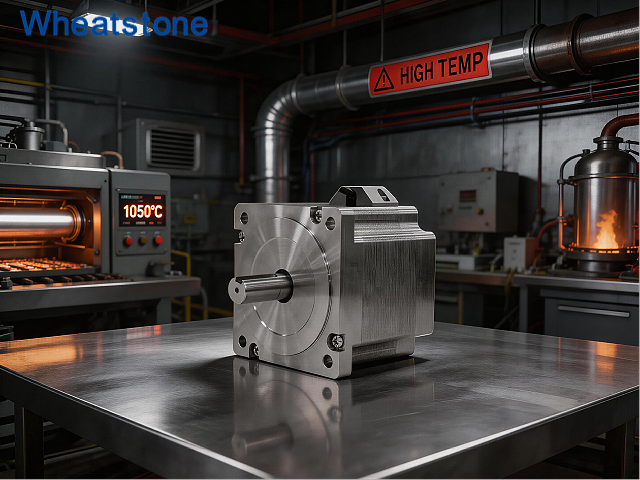
How Wheatstone‘s Class H/C RadiationHardened Insulation and Ceramic Bearings Survive Extreme Conditions Inside Containment
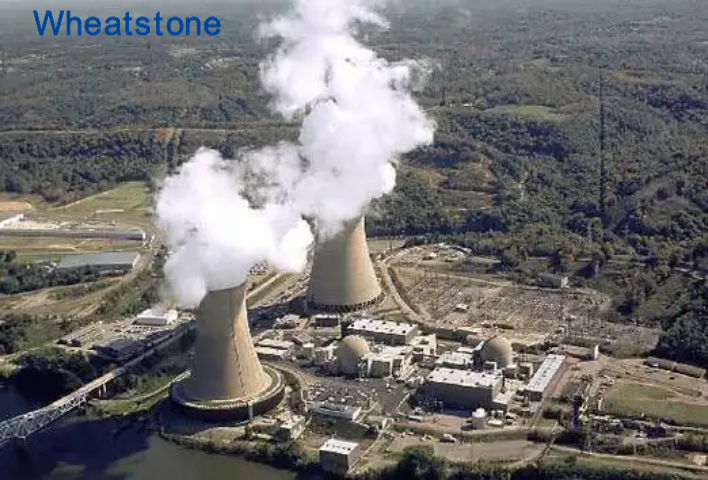
Inside nuclear power plant containment, near reactor coolant system main pump compartments and steam generator rooms, ambient temperatures can persistently exceed 6080 °C and, during lossofcoolant accident (LOCA) scenarios, can briefly spike above 150 °C. Motors located in these areas must endure sustained thermal stress, gamma irradiation, chemical spray corrosion, and high seismic loads. Standard motors in such compounded extreme environments suffer accelerated decomposition of organic insulation under combined heat and radiation, rapid volatilisation and coking of lubricants, and premature failure – a serious threat to the operational safety of nuclear island safetyrelated equipment.
Jiangsu Wheatstone has developed a full series of nucleargrade hightemperature motors specifically for containment and hightemperature radiation areas, combining Class H/C radiationhardened insulation systems, full ceramic bearings with solid lubrication, allmetal hermetic sealing, and radiationtolerant materials – delivering longterm continuous operational safety for control rod drive mechanisms, main pump auxiliary motors, nucleargrade ventilation fans, and radioactive waste treatment systems.
I. Operating Conditions and Technical Challenges Inside Nuclear Plant HighTemperature Areas
Hightemperature zones in nuclear power plants are concentrated inside the reactor building and containment. During normal operation, main pump motor compartments may reach 5060 °C; during accident conditions such as LOCA, containment temperatures can rise momentarily to 150200 °C, accompanied by chemical spray and gamma radiation.
The key challenges facing standard motors in these environments include:
Accelerated insulation ageing: Class F (155 °C) insulation materials degrade rapidly under combined thermal and radiation ageing, with insulation resistance dropping from initial values to below 10 MΩ, eventually leading to turntoturn short circuits or ground faults.
Lubricant degradation: Standard greases volatilise and carbonise above 100 °C, causing bearings to operate under dry friction with greatly accelerated wear rates, potentially leading to seizure.
Permanent magnet thermal demagnetisation: The remanence of NdFeB magnets significantly degrades above 150 °C, affecting torque output stability.
Seal embrittlement: Ordinary rubber Orings harden and crack at elevated temperatures, leading to seal failure and ingress of moisture and contaminants.
II. Core Technologies of Wheatstone NuclearGrade HighTemperature Motors
Class H/C RadiationHardened Insulation Systems – The Thermal Safety Barrier
Wheatstone nucleargrade hightemperature motors use polyimide filminsulated or polyimidemica tape composite insulation with temperature ratings of Class H (180 °C) or Class C (200 °C+). Polyimide exhibits good radiation stability, maintaining insulation resistance above 100 MΩ under 1.0×10⁶ Gy gamma irradiation. Nuclear electromagnetic wire generally employs polyimide film wrap and mica tape wrap structures, which must be reinforced with suitable hightemperature, radiationresistant insulating varnishes. Vacuum Pressure Impregnation (VPI) with solventfree resin fills every winding void, creating a dense voidfree insulating layer that maintains longterm electrical reliability under combined hightemperature and radiation fields.
Full Ceramic Bearings with Solid Lubrication – Eliminating Lubricant Failure
Conventional bearing greases undergo crosslinking hardening or cracking under simultaneous gamma irradiation and high temperature. For highradiation, hightemperature zones, Wheatstone uses full ceramic bearings (silicon nitride balls) with solid lubricant coatings (MoS₂ or diamondlike carbon), completely eliminating liquid lubricants – removing the risk of radiationinduced and thermalinduced lubricant degradation, enabling longterm maintenancefree operation in radiation fields. Ceramic bearings have low thermal expansion coefficients and maintain stable clearance over a wide temperature range from -196 °C to +200 °C.
AllMetal Hermetic Sealing and RadiationTolerant Housings
Cable entries use glasssintered hermetic terminals, where metal pins are fused with specialty glass at high temperature to form an atomiclevel bond with leak rates <10⁻⁹ Pa·m³/s. Housings are optionally 316L stainless steel with heavyduty anticorrosion coatings; all fasteners are stainless steel; seals are fluoroelastomer – resisting hightemperature, highpressure spray under LOCA conditions.
WideTemperature Operation and Thermal Management
Hightemperature permanent magnets (SmCo) maintain flux decay below 5 % at 200 °C, eliminating demagnetisation risk. A thermal interference fit between stator core and housing eliminates airgap thermal resistance; combined with highthermalconductivity potting, a lowresistance heat conduction path is created. For highpowerdensity applications, an integrated liquid cooling circuit is available.
III. NuclearGrade Motor Qualification Frameworks and Standard Compliance
Qualification of safetyrelated (Class 1E) motors for nuclear power plants must follow rigorous international standards.
The US framework centres on IEEE 323, which establishes environmental qualification requirements for Class 1E electrical equipment over the full plant lifetime, covering normal operation, accident conditions, and ageing effects. IEEE 334 specifically addresses continuousduty Class 1E motors, defining type test procedures and acceptance criteria. IEEE 344 specifies seismic qualification requirements for equipment.
The French framework uses RCCE, which is considered technically equivalent to IEEE 323 and mutually referencable. RCCE classifies nucleargrade equipment into K1, K2 and K3 classes by installation location. K1class equipment is located inside containment and must withstand designbasis accident conditions (high temperature, high pressure, radiation, chemical spray); K2class is inside containment but not required to operate during accidents; K3class is outside containment and need only consider normal operating environments and seismic loads.
The IEC/IEEE 60780323 standard provides a unified international qualification framework for equipment used in nuclear facilities worldwide, incorporating principles from both IEEE and IEC systems. Control rod drive mechanisms, main pump auxiliary motors, containment penetration valve actuators, and other safetyrelated equipment inside containment typically require K1 or K2 qualification. Wheatstone nucleargrade hightemperature motors can be supplied with complete qualification documentation sets in accordance with IEEE 323, IEEE 334, RCCE, and IEC/IEEE 60780323, meeting K1, K2 and K3 equipment entry requirements.
IV. RealWorld Nuclear Plant Application Cases
Case 1 – Control rod drive mechanism cooling fan motor, operating nuclear plant
A nuclear plant CRDM area experienced persistently elevated temperatures, requiring motors to run continuously in a hightemperature radiation field for extended periods. After about three years of service, the original motor’s winding insulation resistance had noticeably declined. Wheatstone supplied a custom radiationhardened hightemperature servo motor with Class H polyimide insulation and full ceramic bearings + solid lubrication. The motor has accumulated over 40,000 operating hours with winding insulation resistance consistently above 100 MΩ, and no insulation breakdown or bearing seizure.
Case 2 – Main pump auxiliary oil pump motor, nuclear plant
The main pump motor provides reactor coolant circulation power; its auxiliary oil pump must operate continuously during main pump operation. The motor is located inside the main pump compartment with ambient temperatures up to 60 °C. Wheatstone supplied a Class C (200 °C+) radiationhardened hightemperature motor with widetemperature grease and 316L stainless steel housing. The motor has operated continuously throughout a refuelling cycle with all monitored parameters within normal ranges.
Case 3 – Hotcell remote manipulator joint drive, nuclear fuel reprocessing plant
The hotcell environment has a high gamma dose rate and persistently elevated temperatures. Wheatstone radiationhardened frameless torque motors embedded in hotcell manipulator joints have accumulated over 5.0×10⁶ Gy of radiation exposure and operated continuously for two years in this hightemperature radiation field, maintaining stable positioning repeatability.
Case 4 – Containment penetration valve electric actuator, nuclear plant
This valve is installed at a containment penetration and must operate reliably under both normal and accident conditions. Wheatstone supplied a radiationhardened explosionproof servo motor that passed IEEE 323/334 qualification testing, including thermal ageing, radiation ageing, and LOCA simulation spray tests. The motor has operated in a hightemperature radiation zone for one refuelling cycle, with all valve actuation strokes performed normally.
V. Wheatstone NuclearGrade HighTemperature Motor Selection Guide
| Series | Insulation Class | Operating Temperature | Cumulative Radiation Dose | Qualification Class | Typical Applications |
| NRHT Series | Class H (180 °C) | -40 °C to +120 °C | 1.0×10⁶ Gy | K3/K2 | Auxiliary building fans, pumps |
| NRHP Series | Class C (200 °C+) | -40 °C to +200 °C | 5.0×10⁶ Gy | K2/K1 | Containment valve actuators, CRDM cooling fans |
| NRR Series | Ceramic insulation | -196 °C to +200 °C | 1.0×10⁷ Gy | K1 | Control rod drive mechanisms, hotcell manipulators |
| NRW Series | Class H/C | -40 °C to +150 °C | Custom | K3/K2 | Radioactive waste treatment pumps, ventilation systems |
All series customisable for voltage (AC 380 V1140 V / DC 24 V3000 V), power 50 W200 kW, frame size 40400 mm, encoder options (23bit absolute / resolver / incremental), brake, etc. Full qualification documentation sets for IEEE 323, IEEE 334, RCCE and IEC/IEEE 60780323 are available.*
VI. Conclusion
The interior of nuclear plant containment is not merely an “unforgiving environment“ for standard motors – it is a multipleextreme test chamber of thermal ageing, radiation, chemical spray, and seismic loads. From K3class auxiliary building fans to K1class control rod drive mechanisms, Wheatstone nucleargrade hightemperature motors deliver the reliability demanded by each safety classification through Class H/C radiationhardened insulation systems, full ceramic bearings with solid lubrication, and allmetal hermetic sealing – providing traceable, verifiable, and crossstandardmutuallyrecognisable power solutions.
For nucleargrade hightemperature motor selection or qualification support, contact the Wheatstone technical team for fullprocess assistance – from IEEE 323/RCCE standard compliance assessment and qualification documentation to onsite commissioning.

 86-0519-86163211,86-0519-86163212







