On automated production lines, when power is cut on a vertical axis, the load depends entirely on the brake. If the brake fails, the consequences can range from damaged workpieces to smashed equipment—or even personal injury. That's why every engineer who's worked with brake-equipped servo motors has two questions in the back of their mind: How long does the brake actually last? And how often should I inspect it?
A plant manager once told me about a nightmare: "We had a hoist running for over two years. One day, the brake failed without warning, and the load dropped straight down. Thankfully no one was underneath. When we opened it up, the friction disc was completely worn out—the gap was big enough to slide a coin into."
We analyzed the situation: that hoist cycled thousands of times per day—heavy load, high frequency. They had never inspected the brake. Short service life plus no maintenance? Failure was inevitable.
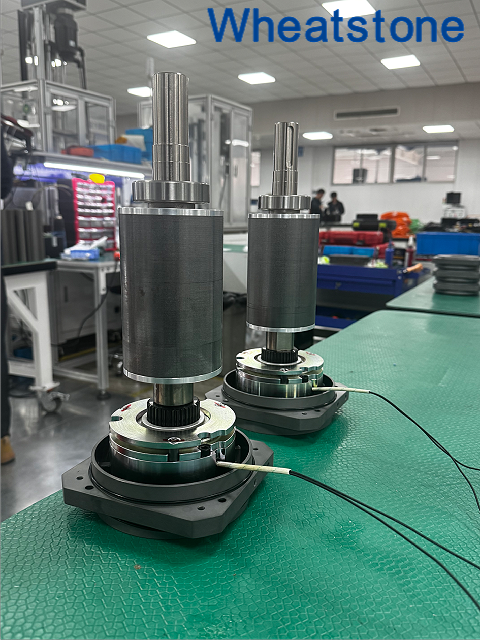
I. How Long Does a Brake Actually Last? 500,000 to 10 Million Cycles—What Makes the Difference?
A brake's core components are friction discs and springs. Each time the brake engages, friction wears the disc. Each time it releases, the spring experiences fatigue. So brake life is typically measured in "cycles," not years.
Industry standard brake life ranges from 500,000 to 10 million cycles. Why such a wide range? Many factors influence it:
Load magnitude: Higher load means higher braking torque required, faster friction wear.
Operating frequency: 10 cycles per hour vs. 100 cycles per hour—huge difference in life.
Load inertia: High inertia loads require the brake to dissipate more energy, increasing wear.
Installation accuracy: Eccentric mounting causes localized stress, accelerating uneven wear.
Ambient temperature: High temperatures accelerate lubricant evaporation and friction material aging.
Supply voltage: DC brake coil voltage fluctuations affect holding force; insufficient force causes slipping.
So brake life isn't a fixed number—it's a range. 500,000 cycles applies to heavy load, high frequency, harsh conditions. 10 million cycles applies to light load, low frequency, ideal conditions.、
II. Why Regular Inspection Is Non-Negotiable
Brakes are mechanical components—wear is inevitable. Without inspection, problems accumulate.
Common Failure Modes:
Friction disc wear: Increased air gap, longer engagement time, reduced braking force. Severe cases: spring travel exhausted, brake fails to hold.
Spring fatigue: Repeated stress can cause spring fracture or reduced force, compromising braking.
Coil aging: Insulation deterioration may cause short circuits or open circuits—brake won't engage or release.
Lubrication failure: Grease dries out in moving parts (armature, guide pins), causing sticking.
Abnormal clearance: Mounting bolts loosen, gap increases, producing impact noise.
Recommended Inspection Intervals (based on duty):
| Duty Type | Inspection Interval | What to Check |
| Light load / Low frequency | Every 6 months to 1 year | Air gap, abnormal noise, coil resistance |
| Medium load / Medium frequency | Every 3 to 6 months | Gap, wear amount, spring condition |
| Heavy load / High frequency / Vertical axis / Safety-critical | Monthly to quarterly | Detailed teardown, wear measurement, coil, spring |
During inspection: use feeler gauges to measure gap, listen for abnormal sounds during brake operation, use a multimeter to check coil resistance and insulation, and monitor brake engagement time via the drive.
III. Tips to Extend Brake Life
Design Margin
Brake rated torque should be at least 1.5~3 times the required load torque. This slows wear significantly. Wheatstone brake servo motors typically have generous torque margins, ensuring durability even under high frequency.
Proper Timing
Drive control of the brake must follow the principle: "motor excites first, brake releases second; brake engages first, motor de-energizes second." Incorrect timing—brake engaging under load—dramatically accelerates wear. Wheatstone drives feature programmable brake control logic for precise delay settings.
Dual Brakes for Vertical Axes
For heavy vertical loads, a single brake carries too much risk. Wheatstone offers dual-brake redundancy: two independently controlled brakes. If one fails, the other still holds the load. Plus, wear is shared, extending overall life.
Condition Monitoring for Early Warning
Wheatstone brake motors can be equipped with built-in sensors to monitor cycle count, engagement time, temperature, and more. Algorithms predict remaining life and issue alerts before failure occurs.
IV. Real-World Case: Dual Brakes Keep a Hoist Running for a Decade
An automotive parts plant had a vertical lift line handling 2-ton loads, cycling about 800 times per day—classic heavy-load, high-frequency duty. They used a standard brake motor that required brake replacement every 18 months. Each replacement meant days of downtime and hundreds of thousands in lost production.
They switched to a Wheatstone dual-brake servo motor. The two brakes alternate (or can engage simultaneously), sharing the wear. Individual brake life extended to over three years. Drive-based condition monitoring now gives them one month's warning before wear limits are reached—they schedule replacements during planned downtime. No more sudden failures.
V. Wheatstone Brake Servo Motor Selection Guide
| Series | Power Range | Brake Torque | Brake Life (Reference) | Typical Applications |
| 60ST Series | 0.4-1.5kW | 2-6Nm | 5 million cycles | Light load horizontal, small manipulators |
| 80ST Series | 1.5-3kW | 8-15Nm | 3 million cycles | Medium load horizontal/vertical |
| 110ST Series | 3-7.5kW | 20-50Nm | 2 million cycles | Heavy vertical lifts |
| 130ST Series | 7.5-15kW | 60-120Nm | 1 million cycles | Large load hoists, heavy equipment |
| Dual-Brake Series | 0.4-22kW | Custom | Shared wear | Safety-critical, heavy vertical |
VI. Summary
Brakes are not maintenance-free. They have a finite life and require regular inspection. Light duty, low frequency: check annually. Heavy duty, high frequency: check monthly. Design margin, proper timing, dual brakes, and condition monitoring all contribute to longer brake life and safer equipment.
Wheatstone brake servo motors are designed with these principles in mind—from material selection to structural optimization, from control logic to smart monitoring. We aim to make your equipment reliable and maintenance manageable.
If you have questions about brake motor selection or maintenance, contact the Wheatstone technical team. With nearly two decades of specialty motor experience, we're happy to help.

 86-0519-86163211,86-0519-86163212







