At selection meetings for high-value equipment like semiconductor etchers, vacuum coating systems, and space simulation chambers, the questions engineers ask most aren't "how much power" or "what speed." They're the seemingly simple ones that hide countless pitfalls:
"How do you solve motor cooling in vacuum when it's so difficult?"
"Will the rotor demagnetize at high temperatures? How long can it last?"
"What really makes a vacuum-structured motor different from a standard PMSM?"
Behind each of these questions are hard lessons learned from real projects. Let's break them down.
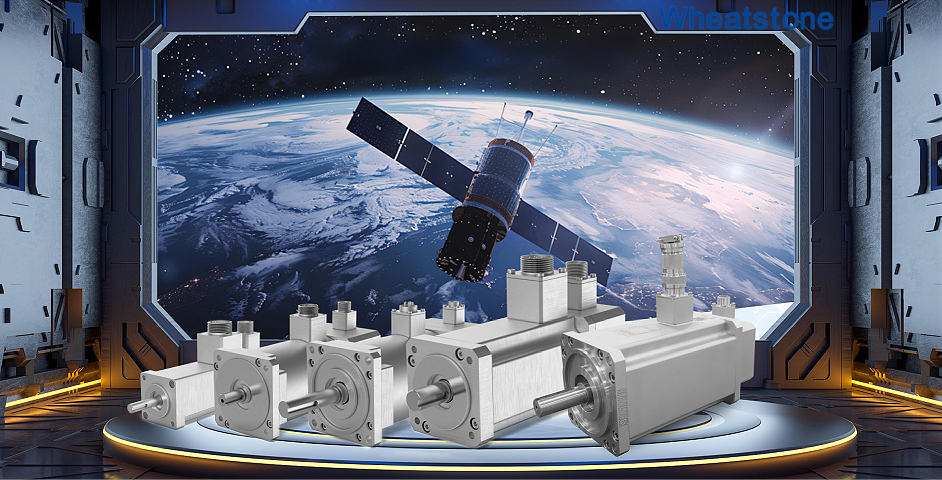
I. Why Is Cooling So Difficult in Vacuum?
Q: Why do motors overheat more easily in vacuum?
From a heat transfer perspective, motors dissipate heat through three paths: convection, conduction, and radiation. In normal environments, convection dominates—fans blow, air flows, heat carries away. In vacuum, air molecules are as sparse as empty streets at midnight. Convection cooling nearly disappears.
Heat can only escape through conduction and radiation. Conduction needs a complete thermal path from windings to housing to mounting surface. Radiation relies on surfaces emitting infrared, which is inherently inefficient. The same motor running in vacuum can see internal temperatures 30-50°C higher than at atmospheric pressure.
Research teams at Shenyang University of Technology, studying motors for vacuum pumps, identified rotor heat dissipation and high temperatures as critical technical challenges in vacuum environments. This isn't a problem solved by simply adding a bigger fan.
Wheatstone's Approach
Wheatstone vacuum PMSMs use conduction-dominant thermal design. Stator cores and housings aren't just pressed together—they're assembled using thermal interference fit: heat the housing, chill the stator, assemble for zero-gap contact, near-zero thermal resistance. Winding ends and slots are filled with high-thermal-conductivity potting compound, creating efficient heat paths from sources to housing, then through mounting flanges to chamber walls.
For higher power density applications, Wheatstone offers integrated liquid cooling circuits. Coolant circulates internally, carrying heat to chamber-contact areas for indirect dissipation.
II. High Rotor Temperature: Will Magnets Demagnetize?
Q: With high rotor temperatures in vacuum, can the permanent magnets survive?
This is one of users' biggest concerns. Standard NdFeB magnets start showing irreversible flux decay above 120°C, with significant demagnetization risk by 150°C. In vacuum, where rotor cooling is difficult, temperatures can easily cross this line.
Academic research shows that for vacuum pump drive motors, rotor temperature rise control is a core design challenge. Optimizing rotor magnetic barriers and rearranging permanent magnets can effectively reduce rotor losses and temperature rise. This tells us two things: vacuum rotor temperature needs special attention, and design-stage solutions are critical.
Wheatstone's Material Selection Approach
Wheatstone's vacuum series offers multiple permanent magnet options based on vacuum level and temperature requirements. For Conventional high-vacuum applications, we use high-temperature grade NdFeB like N38UH, rated to 180°C. For higher temperatures, Samarium Cobalt magnets handle 350°C with less than 5% flux decay at 200°C.
Material choice alone isn't enough—eddy current losses need control. Wheatstone uses segmented magnets, blocking eddy current paths to reduce rotor heating. Combined with vacuum pressure impregnation, high-thermal-conductivity resin fills rotor voids, conducting heat away.
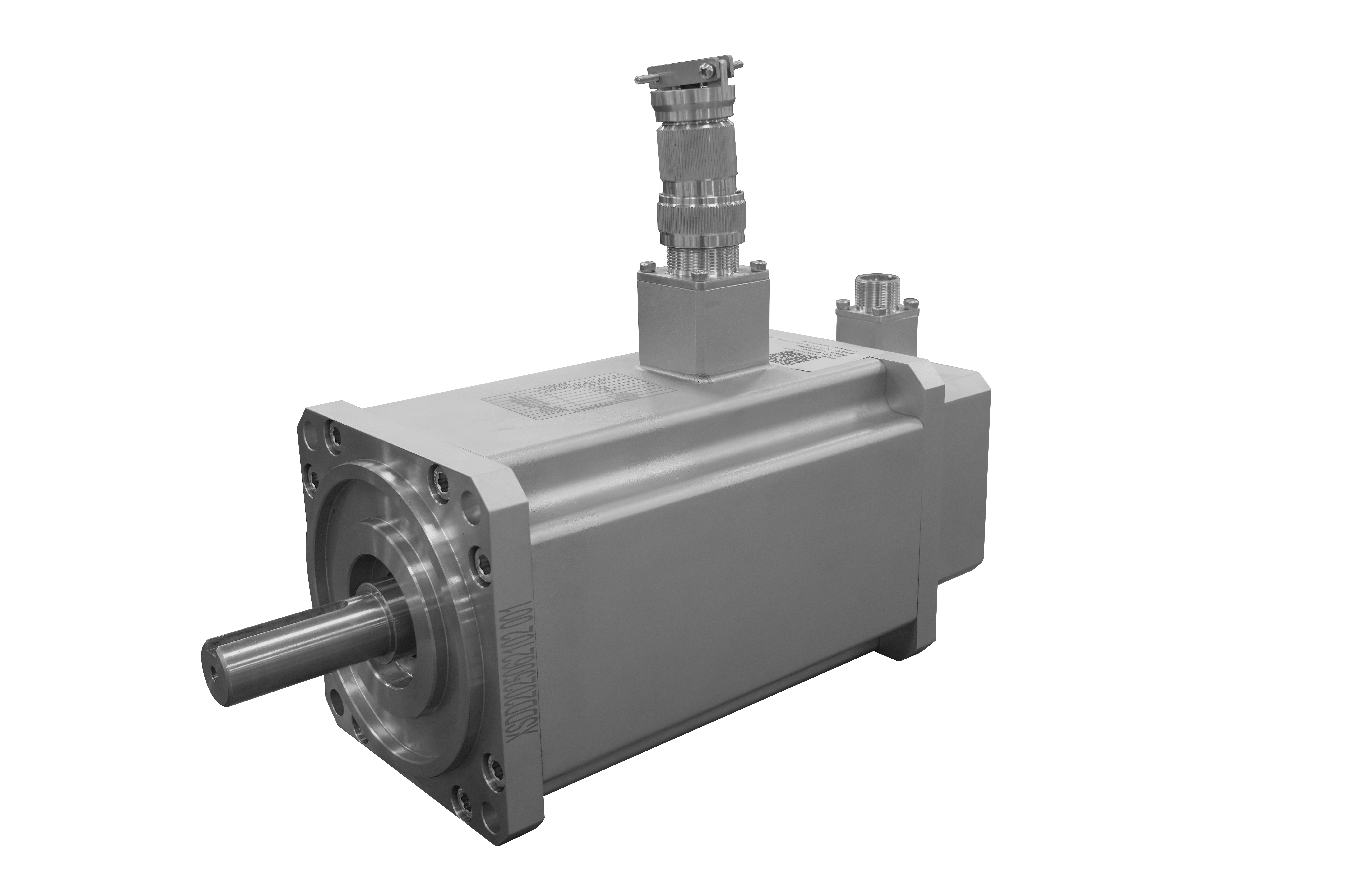
III. What Really Makes Vacuum Structure Special?
Q: Everyone says vacuum motors are special. Besides cooling, what's different?
This question hits the mark. Vacuum challenges motors systematically, not just thermally:
Material Outgassing. Standard motor insulation varnish, plastics, and rubber seals—fine at atmospheric pressure—continuously release gas molecules in vacuum: water vapor, hydrocarbons. They contaminate the entire vacuum system. Research shows Total Mass Loss (TML) is a critical parameter for high-purity vacuum processes.
Insulation Withstand. In vacuum, air is thin, dielectric strength drops. The same voltage can cause discharges. Insulation between turns, phases, and to ground must be redesigned.
Bearing Lubrication. Standard greases volatilize and carbonize in vacuum. Base oil evaporates, leaving hard thickener that acts as abrasive, not lubricant. Bearings seize.
Wheatstone's Systematic Solution
Wheatstone vacuum PMSMs control outgassing at the material source. Insulation uses polyimide film and mica tape with no low-molecular-weight additives. Magnet wire is specially formulated vacuum-grade, smooth surfaces minimizing gas adsorption. Connectors use glass-sintered terminals, thoroughly eliminating plastic outgassing.
Lubrication is matched to vacuum level: high vacuum uses PFPE grease with vapor pressure down to 10⁻¹² Torr; ultra-high vacuum uses solid lubricant coatings, zero volatiles.
Insulation systems are redesigned for vacuum, with increased creepage distances and optimized slot insulation. Vacuum Pressure Impregnation with solvent-free resin fills every void, eliminating discharge paths.
IV. Wheatstone Vacuum PMSM Series
Wheatstone has nearly two decades of experience in vacuum motors, covering applications from rough to ultra-high vacuum.
By Vacuum Level
| Series | Vacuum Level | Typical Applications | Key Features |
| VX-L Series | >10⁻²Pa | Vacuum drying, packaging | Low-outgassing insulation, PFPE grease, conduction cooling |
| VX-H Series | 10⁻²-10⁻⁵Pa | Vacuum coating, semiconductor | Ceramic bearings, VPI windings, optional liquid cooling |
| VX-U Series | <10⁻⁵Pa | Space simulation, accelerators | Full ceramic bearings, solid lubrication, metal seals |
| Custom Series | Custom | Special processes | Custom materials and structures |
By Power/Voltage
| Parameter | Wheatstone Custom Range |
| Power Range | 50W - 200kW |
| Voltage | DC 24V - 3000V / AC 220V - 1140V |
| Speed Range | 0 - 60000rpm |
| Insulation Class | Class H (180°C) / Class C (200°C+) |
| TML | <0.5% (meets aerospace requirements) |
| Clean Assembly | Class 1000 cleanroom, ultrasonic + vacuum bakeout |
Final Thoughts
Back to those three questions: Vacuum cooling challenges? Solved by conduction path optimization and material heat conduction. High-temperature demagnetization risk? Solved by magnet selection and eddy current control. What makes vacuum structure special? Materials, lubrication, insulation, process—every link in the chain.
Wheatstone has spent nearly two decades accumulated experience in vacuum PMSMs. Materials databases, process control, thermal simulation, outgassing testing—it's all in every motor.
If you're looking for PMSMs that can handle vacuum—high or ultra-high, semiconductor or research—let's talk. Wheatstone's engineering manual contains dozens of material combinations and hundreds of custom cases. Maybe the perfect solution is waiting for your project.

 86-0519-86163211,86-0519-86163212







