Next to a steel plant's continuous casting line, ambient temperatures hover above 150°C. Along glass furnace conveyors, radiant heat makes equipment surfaces untouchable. Near petrochemical reactors, process heat tests every rotating machine.
Standard motors fail quickly here. That's why specialty high-temperature motors exist: high-temp steppers, servos, and permanent magnet motors. All handle heat, but their personalities and strengths differ. Choose right, and they run for years. Choose wrong, and you're replacing motors every month.
Let's break down the differences.
I. Technical Characteristics Comparison
High-Temperature Stepper Motors: Open-Loop, Simple Construction
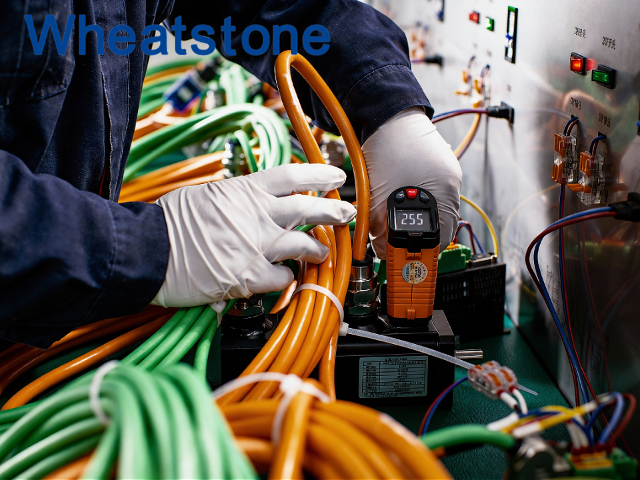
Stepper motors operate on fixed step angles, controlling position via pulse signals -1. Their advantages: simple structure, easy control, relatively low cost. In high-temperature environments, steppers need no encoder feedback—one less heat-sensitive component.
The downsides: open-loop control means they can "lose steps" if load exceeds torque capacity, and torque drops at high speeds -1. In high heat, magnetic property changes can further affect output torque.
High-Temperature Servo Motors: Closed-Loop, Fast Dynamic Response
Servo motors use encoders for real-time position and speed feedback, with drives continuously sampling, calculating, and adjusting for precise acceleration/deceleration and positioning . Advantages: fast dynamic response, smooth torque, strong overload capacity.
Servo challenges: system complexity. Encoders, drives, and controllers all must survive high temperatures. Encoder signal stability under heat and drive cooling are technical hurdles.
High-Temperature PM Motors: High Efficiency, High Power Density
High-temperature PM motors use heat-resistant magnets like Samarium Cobalt. With rotor magnets already providing flux, they need no excitation current, achieving higher efficiency than induction motors . Advantages: high power density, lower temperature rise, compact size. For the same power output, PM motors generate less heat—a big plus in hot environments.
PM challenges: magnet thermal stability. Standard NdFeB starts demagnetizing at 150°C, requiring High temperature grades like SmCo Field weakening control is also more complex.
II. Application Scenario Differences
| Motor Type | Suitable Applications | Less Suitable Applications |
| High-Temp Stepper | Open-loop positioning, preset angles, low-speed high torque | High-speed continuous operation, varying loads |
| High-Temp Servo | Reciprocating motion, dynamic tracking, high precision | Extreme heat, strong radiation interference |
| High-Temp PM Motor | Continuous operation, energy saving, space-constrained | Frequent reversing, rapid acceleration/deceleration |
High-Temp Stepper Applications
Steppers excel at "move to position, stop" tasks . Many high-temperature applications fit this: glass edging angle presets, furnace door opening/closing, heat treatment line indexing.
A ceramic sintering line used steppers to position pusher plates at nearly 200°C. Wheatstone HS series high-temp steppers, with special thermal insulation mounting, ran two years without failure. High-temperature insulation and PFPE grease kept internal winding temperatures below 180°C, step accuracy maintained .
High-Temp Servo Applications
Servos excel at "controlled motion processes" . High-temperature applications needing dynamic adjustment often require servos.
An auto parts plant's painting reciprocator moved spray guns along 150°C oven channels, requiring ±0.5mm positioning. Original steppers occasionally lost steps in the heat, causing uneven coating. After switching to Wheatstone 130-frame high-temp servos with 23-bit absolute encoders, they've run 18 months without deviation. Class H insulation and forced air cooling kept windings below 155°C .
High-Temp PM Motor Applications
PM motors shine in continuous operation, energy-critical applications. Pumps and fans in petrochemical, steel, and chemical plants run for years—every watt saved is pure profit.
Chengde Machinery's PM semi-direct drive motors have been deployed in seven major oilfields including Daqing, Changqing, Xinjiang, and Qinghai, accumulating over 5,200 hours of stable operation . At 3,000-meter altitude in Qinghai, 40°C+ summer heat in Tarim's dusty zones, and 0°C winters in Erlian Basin, these motors run steadily . Compared to traditional induction motors, they're more efficient, smarter, and lower maintenance .
Wheatstone's TBYC series high-temp PM synchronous motors, with SmCo magnets and Class C insulation, have run two years on refinery heavy oil pumps at 180°C ambient. Winding temperatures stay below 155°C, efficiency above 92% .
III. High-Temperature Design Considerations
Material System Differences
Materials are the core of high temperature motors. Standard insulation varnish ages above 130°C, requiring Class H (180°C) or Class C (200°C+) polyimide film and mica tape . Standard NdFeB magnets demagnetize at 150°C, needing SmCo or AlNiCo alternatives . Standard grease evaporates at 150°C, requiring PFPE grease good to 300°C .
Wheatstone's high-temp motor series matches materials to temperature grades: N38UH NdFeB below 150°C, SmCo for 150-200°C; insulation systems by Class H/C; grease by operating temperature .
Cooling Structure Differences
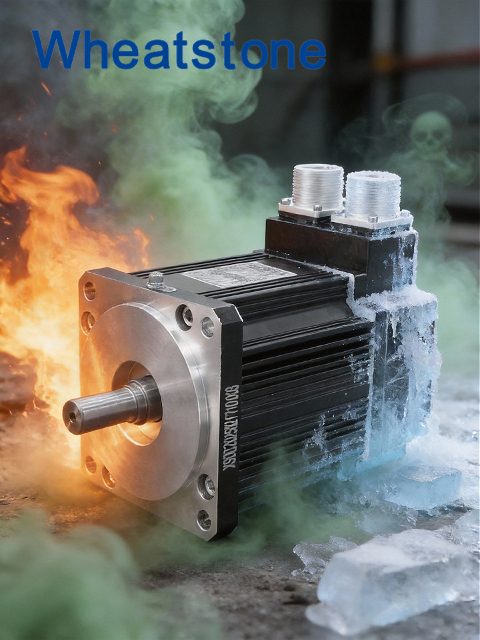
Steppers rely mainly on housing conduction cooling, requiring good thermal paths to mounting surfaces. Servos generate more heat, often needing forced air or water cooling. PM motors, with higher efficiency, generate less heat but still need auxiliary cooling in hot environments.
Wheatstone's liquid-cooled high-temp motors feature spiral water channels in the stator back, cool antdirectly carrying heat away . WCS series water-cooled servos have run over 30,000 hours on steel continuous casting lines, housing temperatures below 85°C .
Process Validation Differences
High-temp motors must pass rigorous thermal aging and thermal shock testing before shipment . Wheatstone High temperature motors undergo 2,000 hours continuous operation at rated temperature, monitoring performance decay, plus rapid heating-cooling cycles simulating process fluctuations .
IV. Wheatstone High-Temperature Motor Selection Guide
| Series | Type | Power Range | Temp Rating | Insulation | Cooling | Typical Applications |
| HS Series | High-Temp Stepper | 0.4-7.5kW | 150-200℃ | Class H | Conduction | Furnace doors, indexing |
| WCS Series | High-Temp Servo | 1.5 5kW | 150-200℃ | Class H | Water/Air | Painting reciprocators, manipulators |
| TBYC Series | High-Temp PM | 7.5-315kW | 150-200℃ | Class H/C | Water/Oil | Pumps, fans, compressors |
| Custom Series | Custom | Custom | 200℃+ | Class C+ | Custom | Special applications |
Final Thoughts
High-temp steppers, servos, and PM motors each have their strengths. Steppers win on simplicity, suited preset positioning. Servos excel at dynamic response for reciprocating control. PM motors lead on efficiency for continuous operation.
Wheatstone has nearly two decades of experience across all three lines. Materials selection, thermal design, process control, testing validation—every step accumulation hard experience. If you're struggling with high-temperature motor selection, let's talk. Wheatstone's engineering manual contains dozens of material combinations and hundreds of application cases. Maybe the perfect solution is waiting for your project.
Contact Jiangsu Wheatstone: www.wheatstonemotor.com. Ask for an engineer directly.

 86-0519-86163211,86-0519-86163212







