At a chemical plant in Southwest China, equipment engineer Mr. Wang encountered a frustrating problem. A newly installed explosion-proof servo motor driving a rotary table would jerk at low speeds and start oscillating as soon as speed increased. After swapping out three different brands, the issue persisted.
Several supplier technicians came and went—some said parameters weren't tuned properly, others blamed the load. It wasn't until a Wheatstone engineer arrived that the root cause was identified: poor inertia matching.
That's when Mr. Wang realized that selecting an explosion-proof servo motor involves much more than just power and torque. Get the inertia wrong, and even the best motor won't perform as expected.
I. What Is Inertia, and Why Must It Be Matched?
In simple terms, inertia is an object's resistance to changes in its state of motion. In rotational motion, the larger the inertia, the harder it is to change speed.
A servo motor's rotor has its own inertia (JM), while the load it drives—such as worktables, lead screws, gears, and workpieces—also has inertia, which must be referred back to the motor shaft as load inertia (JL).
When the motor starts, stops, or changes speed, it must overcome the sum of both inertias. If the load inertia far exceeds the motor's rotor inertia, problems like Mr. Wang's occur:
Jerky motion at low speeds, difficulty stopping precisely
Sluggish acceleration—delayed response to commands
Pronounced oscillation during operation, compromising control accuracy
From a physics standpoint, inertia matching can be traced back to classical collision theory. When two objects of equal inertia collide, momentum can be fully transferred from one to the other. But when load inertia vastly exceeds motor inertia, the motor's control force is like "an ant trying to move a tree"—precision control becomes nearly impossible.
From a control theory perspective, the connection between motor and load is never perfectly rigid. Considering the elasticity of transmission components, excessive load inertia can cause the system to resonate at specific frequencies—this is the high-frequency oscillation observed on-site. The lower the mechanical stiffness, the more pronounced these inertia mismatch issues become.
II. What Inertia Ratio Is Considered Acceptable?
Through years of engineering practice, the industry has developed general guidelines for inertia matching.
The ratio of load inertia JL to motor rotor inertia JM is called the inertia ratio. What range should this ratio fall within?
General industrial applications: Inertia ratio ≤ 10
High-precision positioning: Inertia ratio ≤ 5
High-speed, high-dynamic response: Inertia ratio ≤ 3
If load inertia exceeds motor inertia by more than a factor of 10, the system becomes prone to oscillation, transient response deteriorates, and positioning accuracy suffers. For demanding applications, keeping the ratio below 5—or even aiming for the ideal 1:1—is recommended.
From an energy transfer efficiency perspective, when load inertia equals motor inertia, the load achieves maximum acceleration. While this ideal is rarely attained in practice due to factors like transmission efficiency and friction, it serves as a valuable optimization target.
Why these recommended values? When the inertia ratio is too high, the system's natural frequency drops and may coincide with the mechanical structure's resonant frequency, triggering oscillations. Additionally, the motor must output more torque to overcome load inertia, leading to increased heat generation and reduced service life.
III. Simplified Inertia Calculation Process
Enough theory—how do you actually calculate inertia for selection? Here's a simplified approach.
Step 1: Identify Components Needing Calculation
A typical rotary servo system includes: motor, coupling, lead screw, worktable, and workpiece. The inertia of all these components must be referred to the motor shaft.
Step 2: Calculate Individual Component Inertia
For cylindrical components (motor rotor, coupling, lead screw):
J = (π × ρ × L × R⁴) / 32
Simplified approximation (for steel cylinders):
J ≈ 0.78 × 10⁻⁶ × D⁴ × L (D in mm, L in mm, J in kg·m²)
For linearly moving worktables and workpieces, referred to the lead screw:
J_load = M × (P / 2π)²
Where M is total mass (kg) and P is lead screw pitch (m).
Step 3: Calculate Total Load Inertia
Sum the inertia of rotating components and referred linear components to obtain total load inertia JL.
Step 4: Calculate Inertia Ratio
Inertia Ratio = JL / JM
Where JM is the motor's rotor inertia, available from motor datasheets.
Example: A rotary table with 50kg load, driven by a 10mm pitch lead screw (coupling inertia negligible). Motor rotor inertia is 1.0×10⁻³ kg·m².
Referred linear inertia:
JL_load = 50 × (0.01 / 6.28)² ≈ 50 × (0.00159)² ≈ 50 × 2.53×10⁻⁶ ≈ 1.27×10⁻⁴ kg·m²
If the lead screw itself contributes about 0.5×10⁻⁴ kg·m², total load inertia ≈ 1.77×10⁻⁴ kg·m².
Inertia ratio = 1.77×10⁻⁴ / 1.0×10⁻³ = 0.177, well below 5—an excellent match.
IV. What If the Inertia Ratio Is Too High?
If calculations show an excessive inertia ratio, several solutions exist:
Add a Gearbox
A gearbox is the most effective tool for inertia matching. Load inertia referred to the motor shaft is inversely proportional to the square of the gear ratio:
JL (referred) = JL (load) / i²
Increasing the gear ratio dramatically reduces referred load inertia.
Choose a Higher-Inertia Motor
Within the same power class, servo motors often come in low-inertia, medium-inertia, and high-inertia variants. For high load inertia, selecting a medium or high-inertia motor with larger rotor inertia improves matching.
Optimize Mechanical Design
Reducing load mass, decreasing rotational radii, and shortening transmission chains all help lower load inertia.
V. Selecting Inertia for Wheatstone Explosion-Proof Servo Motors
With nearly two decades of experience in explosion-proof servo motors, Jiangsu Wheatstone brings deep expertise to inertia matching.
Comprehensive Product Range
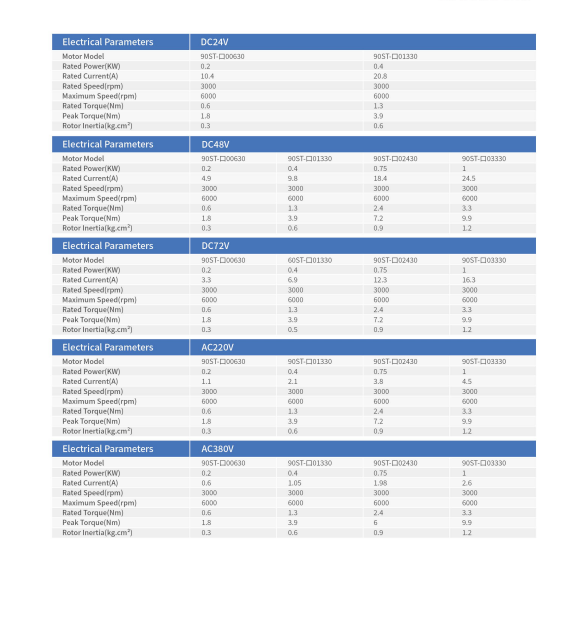
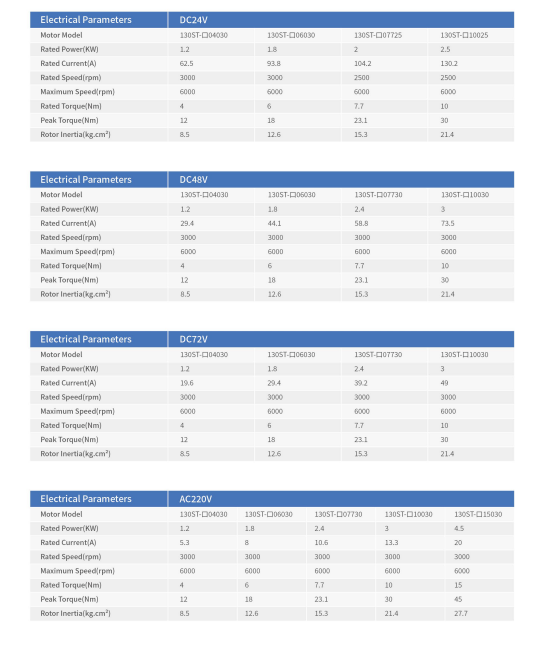
Wheatstone offers a complete line of explosion-proof servo motors spanning 40mm to 400mm frames, 50W to 200kW power. For every application, each product specifies rotor inertia values clearly, facilitating accurate selection.
Take the 40EX series: two common models feature rotor inertia of 46kg·cm² and 80kg·cm² (0.0046kg·m² and 0.008kg·m²). Customers can directly compare these values against calculated load inertia for intuitive selection.
One-to-One Customization
When standard products can't meet special inertia requirements, Wheatstone provides one-to-one custom services. Engineers can optimize motor design and adjust rotor inertia based on actual load characteristics, ensuring optimal system matching.
Professional Selection Support
Wheatstone's technical team offers complete inertia calculation and selection support, helping customers avoid field issues caused by inertia mismatch. From load analysis to motor selection, parameter tuning to on-site commissioning, full-process technical services are available.
VI. Final Thoughts
Inertia matching is a critical yet often overlooked aspect of servo system selection. Less直观 than power and torque, it directly impacts system stability, response speed, and positioning accuracy.
Wheatstone's expertise in explosion-proof servo motors extends beyond防爆 structure design to deep understanding of motor performance fundamentals. Every motor—from electromagnetic design to rotor inertia determination—undergoes rigorous simulation and experimental validation, ensuring perfect load matching in real-world applications.
If you're struggling with explosion-proof servo motor selection or encountering on-site issues like oscillation or slow response, start with inertia matching. Wheatstone's technical team, with nearly two decades of experience, is ready to help you find the optimal solution.

 86-0519-86163211,86-0519-86163212







