In chemical plants, coal mines, and dusty environments, explosion-proof servo motors are critical for safe operation. But the market is flooded with products labeled "explosion-proof"—some are just thickened shells, others lack basic certification. As someone responsible for equipment procurement or maintenance, how can you be sure the motor you're buying will actually operate safely in hazardous areas?
Judging whether an explosion-proof servo motor is genuinely safe requires looking beyond the "Ex" on the nameplate. You need to verify from three dimensions: certification standards, the explosion-proof marking, and construction details.
I. Check Certification: Without a "Passport," It's Just Talk
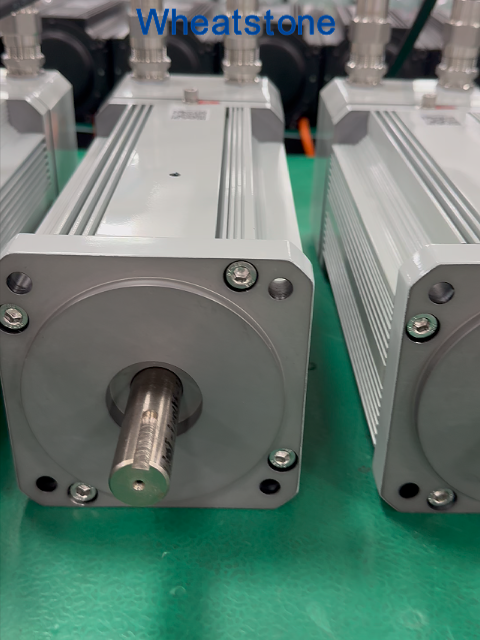
Explosion-proof motors aren't certified by manufacturers themselves. They must pass testing by authorized national explosion-proof inspection agencies and obtain an explosion-proof certificate.
Domestically, they must meet the GB 3836 series standards. This is China's fundamental standard for explosion-proof electrical equipment, covering general requirements, flameproof "d," increased safety "e," and more. Legitimate explosion-proof motors should have a certificate from CNEX or similar agencies.
Internationally recognized certifications include IECEx and ATEX. IECEx is the International Electrotechnical Commission's certification system, while ATEX is the EU directive. Both are essential for export equipment.
Wheatstone's certifications: Jiangsu Wheatstone's motors have obtained explosion-proof certification, CE certification, and ROHS certificates. The 180ST-X30010B-EX-380V coal mining explosion-proof servo motor, for example, has both 3C certification and explosion-proof certification, suitable for dust and gas hazardous areas.
II. Understand the Marking: Decoding the String of Characters
When you look at an explosion-proof motor's nameplate, you should be able to read the marking like an ID card.
Take a typical marking: "Ex d IIB T4 Gb"
Ex: General Label for explosion-protected equipment
d: Protection type—d means flameproof. This is the most common structure, enclosing components that could ignite explosive gas mixtures within a housing that can withstand internal explosion pressure and prevent flame propagation
II: Equipment group—II is for explosive gas environments other than coal mine gas
B: Gas subgroup—IIB Representative ethylene as the representative gas, suitable for most petrochemical scenarios
T4: Temperature class—T4 means maximum surface temperature ≤135℃. Classes range from T1 to T6, with T6 being the most stringent (≤85℃)
Gb: Equipment protection level—Gb indicates "high" protection level for explosive gas environments, suitable for Zones 1 and 2
For dust explosion protection, the marking might be "Ex tb IIIC T130℃ Db," where "t" means dust-ignition-proof enclosure, "IIIC" means conductive dust, and "T130℃" is the maximum surface temperature.
Wheatstone's complete line of explosion-proof control motors covers Class I (coal mining), Class II (gas), and Class III (dust) certifications, meeting requirements for various hazardous areas.
III. Inspect the Construction: Safety Is in the Details
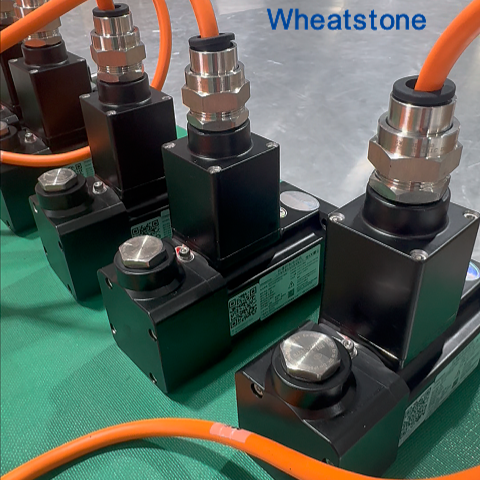
A genuine explosion-proof motor has strict design requirements, inside and out.
Flameproof Enclosure
The housing isn't just a thick shell. An Ex d flameproof enclosure must withstand internal explosion pressure while cooling flames through precisely machined flame paths to prevent ignition of the external atmosphere.
Housings are typically high-strength cast aluminum or cast iron, with wall thickness 20-30% greater than standard motors. Wheatstone explosion-proof servo motor housings are precision-cast and machined, ensuring flame path gaps are controlled within tight tolerances.
Flameproof Joints
The mating surfaces between housing and end covers—called flame paths—require high-precision machining: surface roughness Ra≤6.3μm, gaps controlled within 0.2mm depending on protection level. Joint lengths must meet minimum requirements, typically ≥25mm.
Sealing Systems
Cable entries use explosion-proof glands. Terminals are sealed with glass-sintering or epoxy. Static seals use oil-resistant, aging-resistant fluoroelastomer or silicone rubber O-rings.
Wheatstone motors feature junction boxes and cable entries with at least 6 threads, coated with sealant to prevent gas penetration.
Insulation and Temperature Control
Explosion-proof motors typically require Class H (180℃) or Class C (200℃+) insulation. Windings undergo Vacuum Pressure Impregnation to fill all voids, preventing partial discharge. Built-in PT100 temperature sensors monitor winding temperatures in real-time, triggering protection if limits are exceeded.
Wheatstone motors use Class H insulation and VPI impregnation, ensuring surface temperatures remain within specified temperature classes even at full load.
Thermal Design
Housings feature cooling fins, with explosion-proof fans available for higher loads. Fan blades are metal to avoid static ignition. Protection ratings typically reach IP65 or higher.
All Wheatstone explosion-proof servo motors come standard with IP65 protection, suitable for chemical plants, coal mines, and dusty environments.
IV. Wheatstone Explosion-Proof Servo Motor Selection Guide
| Series | Power Range | Rated Speed | Rated Torque | Protection | Applicable Zones |
| 40EX Series | 0.2-0.4kW | 3000rpm | 0.6-1.3Nm | IP65 | Gas Zone 2/Dust Zone 1 |
| 60EX Series | 0.2-0.75kW | 3000rpm | 0.6-2.4Nm | IP65 | Gas Zone 2/Dust Zone 1 |
| 90EX Series | 0.4-1.2kW | 3000rpm | 1.3-4Nm | IP65 | Gas Zone 1/Dust Zone 1 |
| 110EX Series | 0.6-2.3kW | 3000rpm | 2-7.3Nm | IP65 | Gas Zone 1/Dust Zone 1 |
| 130EX Series | 1.2-4kW | 3000rpm | 4-12.7Nm | IP65 | Gas Zone 1/Dust Zone 1 |
| 150EX Series | 3-5.5kW | 3000rpm | 10-18Nm | IP65 | Gas Zone 1/Dust Zone 1 |
| 180EX Series | 5-7.5kW | 3000rpm | 16-24Nm | IP65 | Gas Zone 1/Dust Zone 1 |
| 220EX Series | 12-22kW | 3000rpm | 40-70Nm | IP65 | Gas Zone 1/Dust Zone 1 |
| 180ST Series | 3-5.5kW | 1000-3000rpm | 30-50Nm | IP65 | Coal mine/gas/dust |
Data sources:
V. Wheatstone Explosion-Proof Motor Product Line
With nearly two decades in control motors, Jiangsu Wheatstone has built a comprehensive product matrix covering diverse explosion-proof applications:
Explosion-Proof Servo Motors: 40EX to 220EX series AC servo motors, 0.2kW-22kW, meeting gas explosion-proof requirements for oil, chemical, and pharmaceutical industries.
Mining Explosion-Proof Servo Motors: 180ST series coal mining motors with煤安 certification, suitable for conveyors and underground equipment.
Explosion-Proof Stepper Motors: Stepper and DC servo motors for precision positioning in hazardous areas.
Radiation-Resistant Motors: Specialty motors for nuclear and medical applications.
Brushless DC Motors: 80, 110, and 130 BLDC motors for AGVs and new energy vehicles.
Wheatstone offers one-to-one customization: voltage, speed, mounting interfaces, and protection levels tailored to specific requirements. The company is ISO9001/TS16949 certified, with products widely used in high-speed rail, AGVs, marine, glass machinery, and new energy vehicles.
If you have questions about explosion-proof motor selection or need custom solutions for specific operating conditions, contact the Wheatstone technical team. From requirements analysis to Solution design to on-site support, Wheatstone engineers will be with you every step of the way, ensuring your equipment operates safely, reliably, and efficiently in hazardous environments.

 86-0519-86163211,86-0519-86163212







