At the deep-sea simulation facility of the Pilot National Laboratory for Marine Science and Technology in Qingdao, engineers watched monitors intently. Inside the chamber, an underwater robotic arm was repeatedly performing gripping tasks under 3,000 meters of simulated water pressure. After 200 hours, all joint motors maintained normal temperatures, perfect sealing, and precise positioning.
"Deep-sea operations make the robotic arm the operator's hand, and the motors are the joints of that hand," the project lead explained. "If a joint fails, the entire mission fails."
Underwater robotic arms face extreme conditions: high pressure, low temperature, corrosion, and darkness. So which motor types can be trusted? What are the non-negotiable requirements? Let's break it down from three angles: motor types, technical standards, and real-world cases.
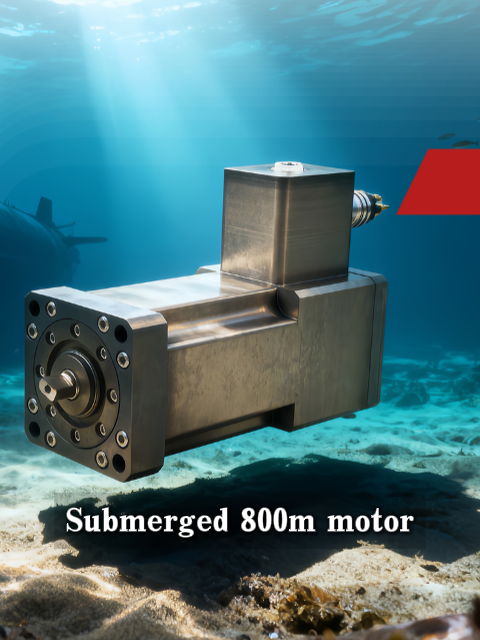
I. Motor Selection: Three Types, Three Roles
Different joints have different needs—some require high torque at low speeds, others need fast response and precise positioning, some just simple open-close actions. Based on mission requirements, the mainstream choices fall into three categories:
Permanent Magnet DC Servo Motors—The Choice for High-Precision Control
For joints requiring precise position control, permanent magnet DC servo motors are the preferred choice. According to JB/T 14544-2024 "Technical Specifications for DC Motors for Underwater Vehicles," which took effect October 1, 2024, these motors must feature high torque density, low speed ripple, and excellent dynamic response . The standard specifies basic parameters, classification, and technical requirements for permanent magnet DC motors used in underwater robots, applicable to Precision actuators like robotic arms .
Wheatstone's TY series underwater permanent magnet synchronous motors use Samarium Cobalt magnets with less than 5% flux decay up to 200°C. Paired with 23-bit absolute encoders, positioning accuracy reaches 0.01 degrees. In one deep-sea research project, robotic arms using these motors operated continuously for 2,000 hours at 3,500 meters depth, maintaining repeatability within ±0.5mm.
Brushless DC Motors—The Reliability Champions
With no brushes to wear out, brushless motors offer long life—ideal for joints requiring extended continuous operation. FAULHABER's case studies show their BP4 series brushless motors power oil-filled actuators at 6,000 meters depth, achieving long-term reliability through pressure compensation technology . Key advantages: no commutation sparks (easier sealing), high efficiency (less heat), and long maintenance intervals.
Wheatstone's WDB series brushless DC motors feature Class H insulation and VPI vacuum impregnation, achieving 20,000 hours of故障-free operation in deep-sea environments. A CSSC underwater vehicle project used these motors for robotic arm shoulder joints, completing three deep-sea missions with over 500 cumulative hours underwater.
Stepper Motors—Cost-Effective Simplicity
For open-loop control and simple motions, stepper motors deliver value. Empire Magnetics reports that Canada's Bedford Institute used stainless steel, oil-filled, pressure-compensated stepper motors at 450 feet depth in the Hudson River, successfully completing underwater sampling tasks . Simple structure, easy control—ideal for applications with stable loads and modest precision requirements.
Wheatstone's HB series hybrid stepper motors offer stainless steel housing options with mechanical seals and pressure compensation, rated for depths up to 2,000 meters. An ocean ranch monitoring platform used these motors for sampling arm actuation at 50 meters depth—two years continuous operation, zero failures.
II. Essential Requirements: Five Barriers Every Underwater Motor Must Cross
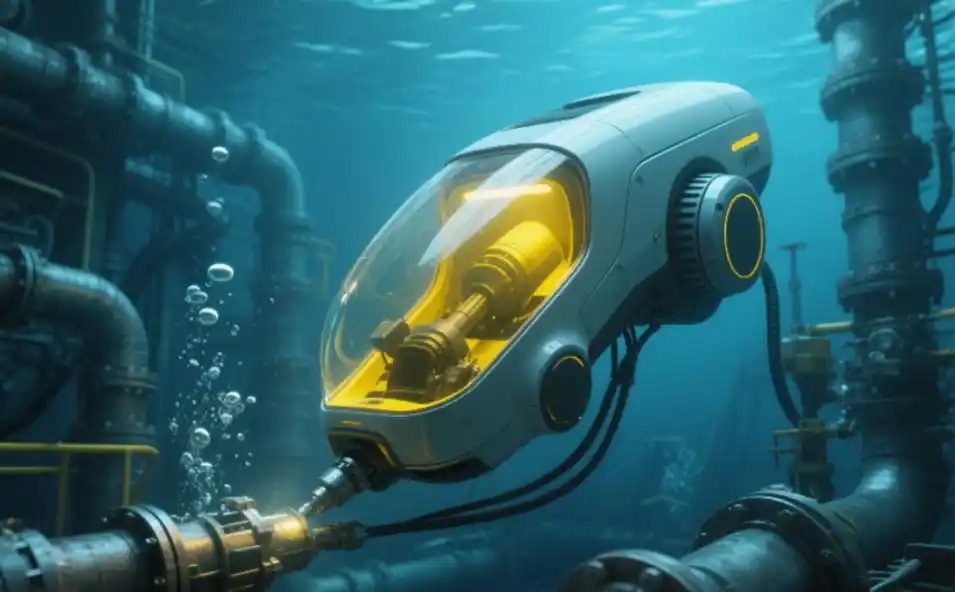
Whatever motor type you choose, if it goes underwater, it must pass these five tests.
Barrier 1: Sealing—IP68 Is Just the Starting Line
Many assume IP68 is enough. But true deep-sea environments combine high pressure, low temperature, corrosion, and cyclic stress. IP68 only guarantees lab conditions—real depth tests systematic pressure-resistant sealing design .
Wheatstone underwater motors deploy three sealing layers:
Static seals: Aviation-grade fluoroelastomer O-rings, rated 50MPa, compression set <15%
Dynamic seals: Silicon carbide double mechanical seals (hardness second only to diamond) with micron-level fluid film
Terminal seals: Glass-sintered feedthroughs, atomic-level metal-glass bonding, helium leak rate <10⁻⁹Pa·m³/s
Barrier 2: Pressure Compensation—The Art of Balance
Below 1,000 meters, even thick walls aren't enough. Pressure compensation technology balances internal oil pressure with external water pressure, allowing lighter housings that don't bear huge pressure differentials.
Wheatstone's WDU series deep-sea motors feature bladder-type pressure compensators filled with high-insulation specialty oil. In 3,000-meter depth tests running 1,000 hours continuously, oil insulation remained stable, all motor performance performance metrics held.
Barrier 3: Materials—Seawater Is "Metal Acid"
Seawater chloride concentration is thousands of times higher than freshwater, corroding Ordinary steel 8 times faster. Underwater motor materials must resist long-term corrosion.
Wheatstone's standard is 316L stainless steel housings with higher molybdenum content, pitting resistance double that of 304. All fasteners are A4-80 stainless. For extreme depths, titanium alloy options are available—the dense oxide film is virtually inert in seawater.
Barrier 4: Insulation—The Motor's "Lifeline"
If water gets in, insulation fails. But even without water ingress, windings must maintain stability under long-term high-humidity, high-pressure conditions.
Wheatstone underwater motors use Class H (180°C) insulation with polyimide film and mica tape composites. Process: VPI vacuum pressure impregnation—10⁻¹Pa vacuum to extract air and moisture, then specialty resin injected under pressure, filling every void. Pre-shipment validation: 24 hours in 3% salt water at 1.5× rated voltage, insulation resistance ≥100MΩ .
Barrier 5: Cooling—Staying "Cool" Underwater
Deep water has no air convection—heat builds up faster than in air. Counterintuitive: cold water outside, but motors overheat more easily .
Wheatstone's design: stator core and housing fully potted with high-thermal-conductivity compound—20× air's thermal conductivity. External spiral cooling fins use water flow for passive cooling. For high-power motors, water-oil composite cooling boosts efficiency by over 30%.
III. Wheatstone Underwater Motor Product Lines
With nearly two decades in control motors, Jiangsu Wheatstone offers a comprehensive matrix covering multiple types and application scenarios:
Underwater PMSM Series: TY series, 0.2kW-22kW, depth ratings 1,000m/3,000m/6,000m, 23-bit absolute encoders, for high-precision robotic arm joints.
Underwater BLDC Series: WDB series, 0.1kW-15kW, depth ratings 500m/2,000m/4,500m, Hall sensors or resolvers optional, for thrusters and rotary actuators.
Underwater Stepper Series: HB series, frames 42mm-110mm, depth ratings 200m/1,000m/2,000m, stainless steel housings, oil-filled compensation optional, for simple open-loop control.
Custom Specialty Motors: One-to-one customization for voltage, speed, mounting interfaces, seal types, pressure compensation methods.
Case Studies:
CSSC underwater vehicle project: Wheatstone TY series PMSMs drive 5-DOF robotic arm at 3,000 meters depth, three missions, 500+ hours fault-free.
Ocean ranch monitoring platform: Wheatstone WDB series BLDC motors drive sampling arm at 50 meters depth, two years continuous operation, disassembly inspection revealed pristine internals.
Deep-sea mining pre-research: Custom oil-filled stepper motors at 6,000 meters simulated depth, 200 hours continuous, stable torque, no step loss.
Wheatstone is ISO9001/TS16949 certified, with products holding China Classification Society type approval, 3C certification, and multiple explosion-proof certifications. From requirements analysis to on-site support, Wheatstone engineers provide end-to-end technical service, ensuring your equipment operates safely, reliably, and precisely in the deep sea.
If you have questions about underwater robotic arm motor selection or need custom solutions for specific depths, contact the Wheatstone technical team.

 86-0519-86163211,86-0519-86163212







