At 4 AM, the baking hall of a large commercial bakery in Shanghai blazes with light. Six tunnel ovens roar at full capacity, conveyor belts carrying trays of dough through 300°C infernos. Equipment manager Zhou stares at his monitor, frowning—the drive motor on Line 3 is alarming again. Third time this month.
"Didn't we just replace that motor?" Zhou mutters, walking over to the oven. He touches the motor housing and jerks his hand back instantly. The thermal gun reads: 112°C case temperature. "Three months old, and the bearings are already singing their death song."
Beside a bakery oven, motors face an invisible trial. Put a standard motor here, and it's like leaving your phone in an oven. It won't last.
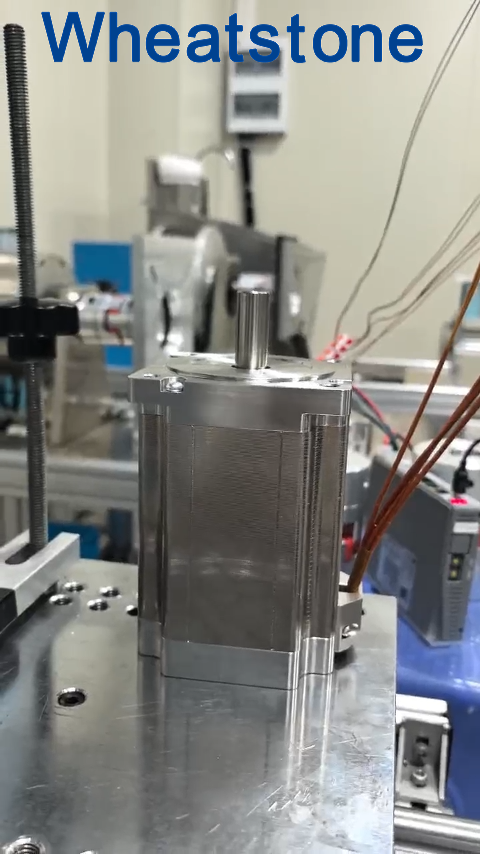
I. The Triple Trial of Bakery Oven Motors
Trial One: The "Breathing Effect" of Thermal Expansion
During operation, internal motor temperatures easily exceed 100°C . Heat expands internal air, increasing pressure and forcing gases out past seals. When an oven batch finishes and the motor cools, temperature plummets, internal pressure drops below atmospheric by nearly half a PSI . This vacuum sucks water and cleaning chemicals right through the seals .
Water inside means bearing failure. Precision bearings, once contaminated, quickly develop noise and seize. Zhou's problem wasn't heat—it was drowning.
Trial Two: Insulation's "Slow Suicide"
Beside bakery ovens, ambient temperatures routinely exceed 60°C. Add radiant heat from the oven itself, and motor winding temperatures can hit 140°C+. Standard Class B insulation (rated 130°C) operates in the red zone every single day.
Motor engineering's cruel "10-Degree Rule" states: insulation life halves for every 10°C above its rated temperature. A motor designed for 10 years may fail in one.
Trial Three: Flour Dust's "Abrasive Attack"
Bakeries have no shortage of flour. Microscopic dust particles infiltrate motors, mix with heat-degraded grease, and form lapping compound—grinding bearing raceways into ruin.
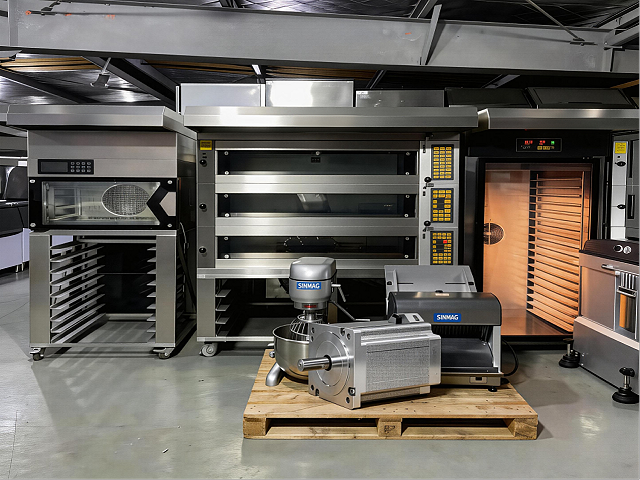
II. Wheatstone's Technical Deconstruction: Heat-Ready Solutions for Bakeries
Against these three trials, Wheatstone high-temperature motors deploy comprehensive countermeasures.
Insulation Systems: Class H Minimum, Class C for Critical
Wheatstone high temperature motors standardize on Class H insulation (rated 180°C), with Class C (200°C+) options for critical positions. Insulation combines polyimide film and mica tape composites with exceptional thermal stability. Vacuum Pressure Impregnation (VPI) fills every winding void with solvent-free resin, eliminating discharge paths and tripling insulation life.
Seal Design: Preventing "Breathing," Not Just Leaks
Addressing thermal cycling's "breathing effect," Wheatstone uses dual protection: static seals with fluoroelastomer O-rings plus specialty sealant, dynamic seals with silicon carbide double mechanical seals. For frequent washdown applications, optional breather vents equalize internal and external pressure, eliminating the vacuum that sucks in water.
Bearing Systems: Ceramic Balls + High-Temp Grease
Bearing balls use silicon nitride ceramic, with thermal expansion one-third that of steel—maintaining clearance through temperature swings. Lubrication is perfluoropolyether (PFPE) grease, rated to 280°C with negligible vapor pressure, no carbonization at high temperatures. C3 clearance bearings accommodate thermal expansion smoothly.
Housing Protection: IP65 Standard, IP67 Optional
All motors feature IP65 protection as standard, dust-tight and splash-proof. For frequent washdown zones, IP67 options handle temporary immersion. Housings are 316L stainless steel, corrosion-resistant and easy-clean, meeting food industry requirements.
III. Selection Calculation: A Real Bakery Example
Zhou's Line 3 oven needs a conveyor drive motor with:
Load torque: 12 Nm (including dough weight)
Speed: 150 rpm
Ambient: 65°C near oven, plus radiant heat
Duty cycle: 8 hours continuous, then 1 hour washdown
Special: Daily high-pressure water wash
Step 1: Power Required
Power P = (T × n) / 9550 = (12 × 150) / 9550 ≈ 0.188 kW
Add transmission losses and margin, select 0.25 kW.
Step 2: High-Temperature Derating
Ambient 65℃ exceeds standard 40℃ by 25℃. Estimating 0.5% derating per ℃ above 40℃ gives 12.5%. Add radiant heat margin, total derating 20%.
Required power = 0.25 kW / (1 - 0.2) = 0.3125 kW
Select 0.4 kW motor.
Step 3: Thermal Balance Check
Winding temperature = Ambient + (Power Loss × Thermal Resistance)
Ambient = 65℃
Power Loss ≈ Input Power × (1 - efficiency) = 400W × (1 - 0.85) ≈ 60W
Thermal Resistance R_th ≈ 1.2 ℃/W (Wheatstone measured data)
Winding Temp = 65 + 60 × 1.2 = 137℃
This is well below Class H 180℃ limit.
Step 4: Protection Rating
Daily high-pressure washdown requires IP65 minimum. Wheatstone standard IP65, optional IP67.
Final Selection: Wheatstone HT40-0.4kW high-temperature motor, Class H insulation, IP65, PFPE grease, with breather vent option.
IV. Wheatstone Bakery Application Cases
Case 1 (China): Shanghai Industrial Bakery
Six tunnel oven conveyors used standard motors averaging 8 months life due to bearing corrosion and grease carbonization. After retrofitting with Wheatstone HT series motors, continuous operation exceeded 26 months without failure. Equipment manager Zhou: "We used to replace motors every six months. Now, two years and still running strong—finally some peace of mind."
Case 2 (International): Artisan Bakery, Manchester, UK
A medium-sized artisanal bakery in Manchester was experiencing frequent failures of the drive motors on their deck ovens. The ovens operate at 280°C, with the motors mounted adjacent to the oven cavity. Original motors failed every 4-5 months due to bearing seizure and winding insulation breakdown.
Wheatstone's UK distributor supplied HT63-1.1kW high-temperature motors with Class H insulation, ceramic bearings, and PFPE grease. After 18 months of continuous operation, inspection showed minimal wear and no signs of lubrication degradation. The bakery's maintenance manager commented: "We used to keep spare motors on the shelf. Now we keep spare shelf space."
V. Wheatstone Bakery High-Temperature Motor Selection Guide
| Series | Power Range | Temp Rating | Insulation | Protection | Applications |
| HT40 Series | 0.1-0.75kW | 150℃ | Class H | IP65 | Small conveyors, fans |
| HT63 Series | 0.75-2.2kW | 180℃ | Class H | IP65/IP67 | Main conveyors, mixers |
| HT80 Series | 2.2-5.5kW | 200℃ | Class H/C | IP67 | Oven zones, high-temp fans |
| WCS Series | 1.5-7.5kW | 200℃+ | Class H/C | IP67+water cooling | Extreme heat locations |
Final Thoughts
Beside bakery ovens, motors endure daily thermal cycles from ambient to over 100°C, assault by flour dust, and high-pressure washdowns. Standard motors fail in months. Wheatstone high-temperature motors run reliably for years.
This isn't luck—it's engineering. Class H insulation, ceramic bearings, PFPE grease, breather vents. Every detail reflects nearly two decades of accumulated experience
AI explain: The phrase refers to the knowledge and skills gained over nearly 20 years, as indicated by the context of long-term refinement..
If you're struggling with high-temperature motor selection for bakeries or food production lines, contact the Wheatstone technical team. We're happy to share our experience and help you find the perfect heat-ready solution.

 86-0519-86163211,86-0519-86163212







